









Do Vitamin D, Zinc, and Vitamin C Really Boost Immunity? A Complete Guide to Supplement Combinations and Dosage
Do you struggle with severe colds that strike every time the seasons change, or with fatigue that cold medicine just can't seem to fix?
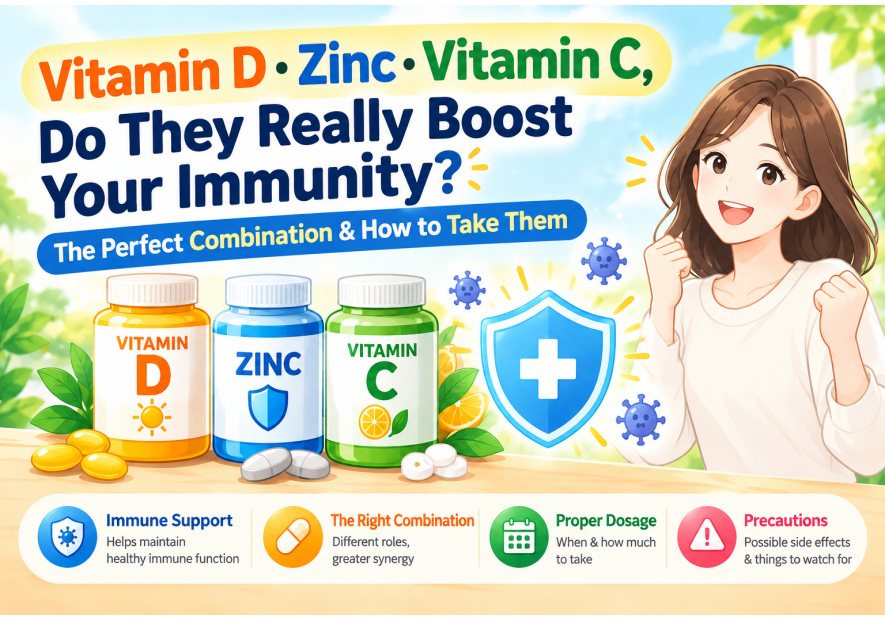
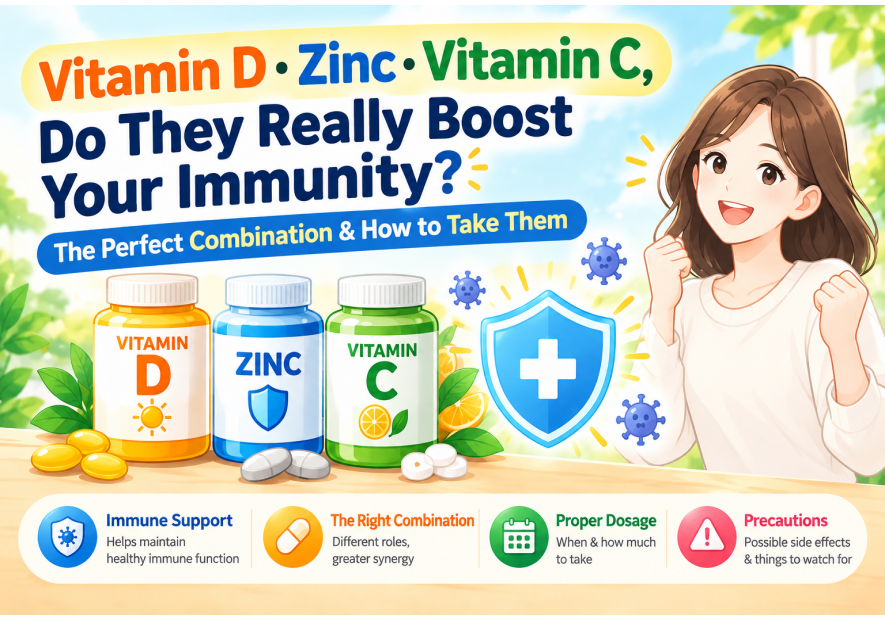
Lately, you’ve likely heard people say that Vitamin D, Vitamin C, and zinc are essential for maintaining a strong immune system. Yet, even while diligently taking these supplements every day, you might have wondered, "Are these actually doing anything for my body?" No matter how high-quality a supplement is, if you don't know the right combinations and dosage methods for your body, you risk wasting both your money and your health. So today, let’s take a closer look at the "Big Three" of immunity—Vitamin D, Vitamin C, and zinc—covering everything from their actual benefits to the optimal combinations that maximize synergy without causing stomach upset, as well as the correct timing and important precautions.
Do immune-boosting supplements really work?
You have likely come across exaggerated advertisements claiming that taking supplements guarantees you will never catch a cold. However, their scientifically proven role is not that of a "cure," but rather that of "reinforcements" that robustly support the body's immune function. Vitamin D regulates immune cells to lower the risk of respiratory infections, while Vitamin C provides powerful antioxidant effects and supports the normal functioning of immune cells, such as white blood cells. Zinc also plays a crucial role in the normal development and function of immune cells and in maintaining an appropriate immune response. Vitamin D supplementation is particularly beneficial for those who are deficient due to a lack of sun exposure, as they are likely to notice a more significant difference. That said, simply consuming large amounts indiscriminately is not the answer. Please remember that the key to managing immunity lies not in excessive intake, but in correcting imbalances by replenishing the specific nutrients your body lacks.
Supplement Combinations for Synergistic Immune Support (Analyzing the Interaction of Vitamins D, C, and Zinc)
Since vitamins D and C and zinc support immune function in distinct ways, taking them together does not result in conflicting roles. Vitamin C provides antioxidant effects and supports immune cell function; zinc is essential for cell division and normal immune responses; and vitamin D plays a role in regulating immune responses. Therefore, if you are deficient in these nutrients, you can safely take them together, as they do not interfere with one another's absorption. However, it is best to avoid excessive expectations, as there is insufficient evidence to conclude that combining these three leads to a multi-fold boost in immunity. While they can be taken together within standard recommended dosages, you must check for potential duplication of zinc or vitamin D if you are also taking a multivitamin. Ultimately, the key is not to combine a large number of supplements, but rather to identify which nutrients you lack and replenish them in balanced, appropriate amounts.
Precautions and Proper Intake Methods
Even high-quality supplements can strain the stomach if not taken correctly, making the proper method of intake crucial. As Vitamin D is fat-soluble, it is best absorbed when taken after a meal containing fat, such as breakfast or lunch. While Vitamin C can generally be taken regardless of meals, those who experience stomach discomfort may find it better to split the dosage between breakfast and lunch. Zinc can also cause nausea if taken on an empty stomach, so it is more comfortable to take it after lunch or dinner. Since taking zinc simultaneously with high-dose calcium or iron supplements can reduce absorption rates, it is far more effective to space them out by at least two hours. The recommended daily intake for adults is 600 IU (15㎍) for Vitamin D, 75–90 mg for Vitamin C, and 8–11 mg for zinc; the upper intake limits are 4,000 IU (100㎍), 2,000 mg, and 40 mg, respectively. However, rather than automatically increasing the dosage during cold season or when symptoms arise, the standard approach is to supplement only as much as needed for individuals with a deficiency or a high risk of one. Caution is particularly necessary because excessive Vitamin D intake can raise blood calcium levels, excessive Vitamin C intake can cause gastrointestinal discomfort, and long-term excessive zinc intake can impair copper absorption. Therefore, if you are taking multiple supplements, it is advisable to calculate the total combined dosage across products; furthermore, if you have a medical condition or are currently taking medication, it is safest to consult a professional before starting supplementation.
Conclusion
Vitamin D, zinc, and Vitamin C are all vital nutrients that support normal immune cell function and immune responses. However, simply consuming large amounts of these nutrients does not guarantee a proportionally stronger immune system; the key lies in appropriately replenishing any specific deficiencies. Checking your nutritional status is particularly advisable for Vitamin D, as supplementation is especially beneficial if a deficiency exists. While these three nutrients can be taken together within recommended dosage ranges, care should be taken to avoid overlapping intake with other products, such as multivitamins. Furthermore, rather than automatically opting for high doses to prevent colds or alleviate symptoms, it is best to use supplements to complement a foundation of balanced nutrition, adequate sleep, and regular exercise. Ultimately, the key to immune health is not simply consuming more, but identifying the nutrients your body needs and consistently maintaining optimal levels.
Frequently Asked Questions (FAQ)
Q. Is it safe to take this product consistently over the long term?
A. It is very safe for long-term daily use, provided you stay within the recommended intake range. However, please note that taking high doses of zinc for an extended period (several months or more) can lead to copper deficiency in the body, so it is important to adhere to the recommended dosage.
Q. Can I take Vitamin D, Vitamin C, and zinc together?
A. Yes, they can be taken together within standard recommended dosage ranges. However, it is important to check for any overlapping ingredients with other products, such as multivitamins.
Q. Does taking large amounts of Vitamin C and zinc help when I have a cold?
A. While Vitamin C and zinc are important nutrients for normal immune function, consuming high doses does not definitively cure the common cold.
Source
1. “Vitamin D supplementation to prevent acute respiratory tract infections: systematic review and meta-analysis of individual participant data”/ Authors: Adrian R. Martineau, David A. Jolliffe, Richard L. Hooper, et al.
2. “Vitamin C for preventing and treating the common cold”/ Authors: Harri Hemilä, Elizabeth Chalker
3. “Zinc in Human Health: Effect of Zinc on Immune Cells”/ Author: Ananda S. Prasad
4. “Vitamin D - Health Professional Fact Sheet”/ Organization: NIH Office of Dietary Supplements (ODS)
5.“Vitamin and Mineral Supplement Fact Sheets”/ Organization: NIH Office of Dietary Supplements (ODS)

Leave a comment