










Berberine vs Curcumin Top Supplements for Managing Lifestyle Related Diseases
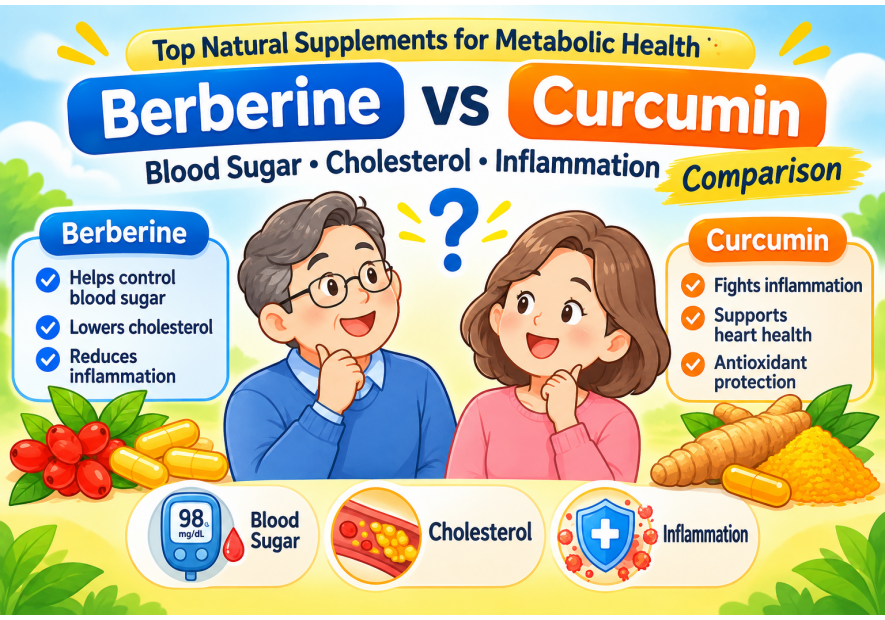
When your health check-up results show red flags for blood sugar or cholesterol levels, it’s natural to feel a sudden sense of alarm—a realization that it’s finally time to take control of your health. If you’re hesitant about starting prescription medication but feel that lifestyle changes alone might not be enough, you may find yourself looking into natural supplements. In this search, two names frequently appear: "Berberine" and "Curcumin." While berberine is often highlighted for its role in blood sugar and lipid metabolism, and curcumin is noted for its potential in addressing inflammation and oxidative stress, what exactly sets them apart? Although both are recognized as excellent for preventing lifestyle-related diseases, the one you should focus on depends entirely on your specific health concerns. In this article, we will compare these two supplements based on three key indicators—blood sugar, cholesterol, and chronic inflammation—to help you determine which one is the right choice for you.
Berberine vs. Curcumin: A Comprehensive Guide Based on 3 Key Indicators for Lifestyle-Related Diseases
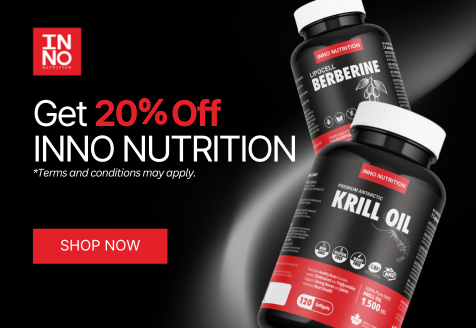
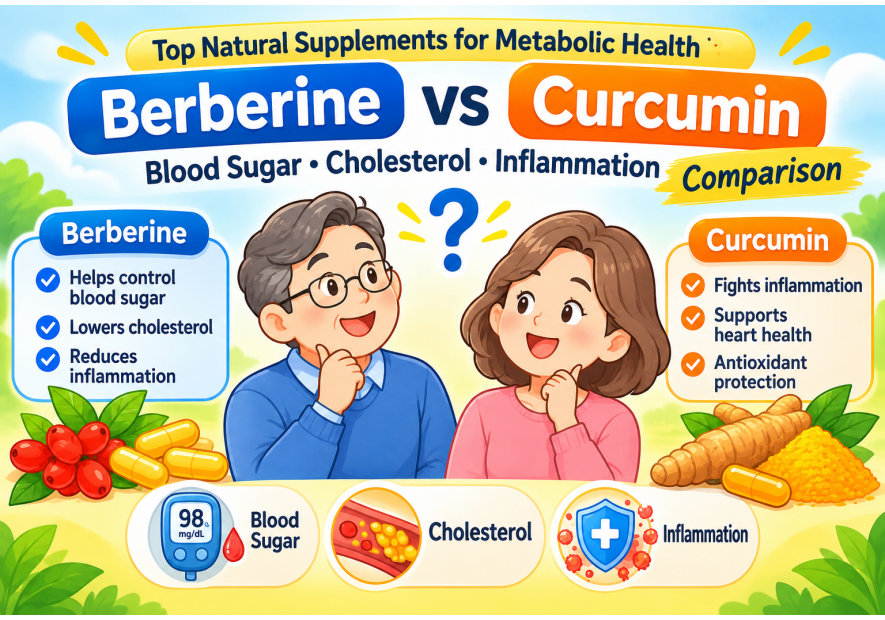
Berberine and Curcumin are currently the two most talked-about compounds in health communities and the international supplement market. Berberine is often dubbed "natural Metformin" because its mechanism of action resembles that of diabetes medication, while Curcumin is referred to as a "natural antibiotic" due to its potent antibacterial and anti-inflammatory properties; both have gained significant attention as supplements for managing lifestyle-related diseases. According to credible academic sources—including the American Diabetes Association (ADA) and the NCBI—both compounds have been shown to be highly effective in reducing blood sugar, cholesterol levels, and chronic inflammation. However, each excels in a different area. When it comes to managing blood sugar and cholesterol, Berberine is particularly effective; it works by directly activating LDL receptors in the liver and the AMPK enzyme, which helps lower these levels. On the other hand, Curcumin is superior when it comes to addressing chronic inflammation and vascular health; it directly inhibits NF-κB—a key driver of inflammation—and exerts a powerful antioxidant effect, making it highly effective at curbing inflammation throughout the body. Therefore, rather than declaring one superior to the other for managing all lifestyle-related diseases, it is best to make your choice based on your specific health goals and the available scientific evidence.
When it comes to lowering blood sugar levels, does berberine—often called "natural metformin"—have the upper hand?
If you have been concerned about managing your post-meal blood sugar levels or your HbA1c (glycated hemoglobin), it is worth looking into how berberine works. Berberine activates an enzyme known as "AMPK"—often referred to as the body’s "metabolic switch"—which encourages cells to absorb glucose, mimicking the effects of physical exercise. According to clinical studies published in prominent medical journals such as *Metabolism* and those indexed on the NCBI, berberine has shown remarkable efficacy—comparable to metformin, a standard diabetes medication—in improving insulin resistance and inhibiting the formation of "glycotoxins" (advanced glycation end-products). While curcumin is also an excellent aid in diabetes prevention—as it helps protect pancreatic cells and enhances insulin sensitivity—berberine holds a clear advantage when it comes to the immediate, potent reduction of post-meal blood sugar and the rapid lowering of HbA1c levels. Therefore, if your primary goal is to see tangible improvements in your blood sugar levels, I recommend considering berberine over curcumin.
Managing Cholesterol and Vascular Inflammation: The Crucial Differences Between Curcumin and Berberine
If you have high cholesterol or are concerned about your vascular health, it is important to distinguish between the cholesterol-lowering effects of berberine and the anti-inflammatory benefits of curcumin. Berberine works by increasing the number of receptors in the liver that clear out "bad" LDL cholesterol, thereby directly reducing both LDL levels and triglycerides. According to a study published in the international journal *Nature Medicine*, berberine has demonstrated exceptional efficacy in improving cholesterol levels through a unique pathway, distinct from that of conventional hyperlipidemia medications. Curcumin, on the other hand, holds a significant advantage when it comes to alleviating chronic inflammation in the vascular endothelium and preventing atherosclerosis. It achieves this through potent anti-inflammatory and antioxidant properties that directly inhibit "NF-kB"—a key "switch" for inflammation—helping to keep blood vessels clear and resilient. In short, if your primary goal is to lower cholesterol and triglyceride levels, berberine is the ideal choice; if your priority is preventing hypertension or managing overall vascular inflammation, curcumin offers the most effective solution.
How to Choose the Right Supplement and Maximize Absorption
So, which supplement is the best fit for you? If you are dealing with high post-meal blood sugar, "skinny fat" (normal weight but high body fat), or hyperlipidemia, berberine is the clear choice. On the other hand, if you are looking to manage arthritis, chronic inflammation, overall vascular health, or antioxidant support, curcumin is recommended. To get the full benefits of either supplement, you must pay close attention to absorption and how you take them. Since curcumin has poor water solubility—making it difficult for the body to absorb—it is essential to choose a "phytosome" formulation, which can increase absorption by several dozen times. Berberine is also fat-soluble, so it is much more effective when taken with a meal that contains healthy fats. However, according to the U.S. National Institutes of Health (NIH) and various clinical studies, berberine can cause gastrointestinal issues such as abdominal pain, diarrhea, or constipation, so it is best taken after a meal. As for curcumin, because it stimulates bile secretion, those with gallstones or biliary tract disorders should exercise caution and consult with a healthcare professional before use. By taking these supplements smartly and in a way that suits your specific health needs, you can safely maximize their potential for preventing lifestyle-related diseases!
Conclusion
Both berberine and curcumin are being studied in the context of chronic, lifestyle-related diseases, yet they differ in their mechanisms of action and the specific benefits they may offer. Research on berberine often focuses on its role in managing blood sugar and cholesterol levels, while studies on curcumin primarily center on markers related to inflammation and oxidative stress. However, as there is insufficient clinical evidence directly comparing the two, it is difficult to definitively claim that one is superior to the other. Furthermore, the fact that these are natural substances does not mean they are free from potential side effects or drug interactions; therefore, it is essential to consider your current health status and any medications you may be taking before starting supplementation. Most importantly, rather than relying solely on nutritional supplements, it is crucial to maintain a balanced diet, engage in regular exercise, and undergo routine check-ups for blood sugar and cholesterol levels. Remember that the right supplement for you is not necessarily the one that is currently trending, but rather one that is selected based on scientific evidence, safety, and your own specific health needs.
Frequently Asked Questions (FAQ)
Q. Is it okay to take berberine and curcumin together?
A. Yes, these two substances do not conflict; in fact, they can have a synergistic effect. Berberine helps improve blood sugar and lipid levels, while curcumin provides anti-inflammatory benefits and supports vascular health, working together to help prevent lifestyle-related diseases.
Q. Is it safe to take both supplements consistently over a long period?
A. While curcumin is generally considered safe for long-term use, berberine can influence the gut microbiome. For berberine, it is recommended to take a break for 2–4 weeks after every 3–6 months of use to monitor your condition.
Q. Can I take these if I am already on prescription medication for diabetes or high lipid levels (hyperlipidemia)?
A. Taking berberine alongside diabetes medications (such as metformin) or other prescription drugs may increase the risk of hypoglycemia (dangerously low blood sugar). If you are already taking such medications, you must consult with your physician before adding these supplements to your regimen.
Source
1. Overall and Sex-Specific Effect of Berberine on Glycemic and Insulin-Related Traits: A Systematic Review and Meta-Analysis of Randomized Controlled Trials/ Authors: Jie V. Zhao, Xin Huang, Junmeng Zhang, Yap-Hang Chan, Hung-Fat Tse, Joseph E. Blais
2. Overall and Sex-Specific Effect of Berberine for the Treatment of Dyslipidemia in Adults: A Systematic Review and Meta-Analysis of Randomized Placebo-Controlled Trials/ Authors: Joseph E. Blais, Xin Huang, Jie V. Zhao
3. Curcumin on Human Health: A Comprehensive Systematic Review and Meta-Analysis of 103 Randomized Controlled Trials/ Authors: Ali Jafari, Maryam Abbastabar, Alireza Alaghi, Javad Heshmati, Francesca L. Crowe, Mahdi Sepidarkish
4. Efficacy and Safety of Berberine for Dyslipidaemias: A Systematic Review and Meta-Analysis of Randomized Clinical Trials/ Authors: Jianqing Ju, Jingen Li, Qian Lin, Hao Xu

Leave a comment