








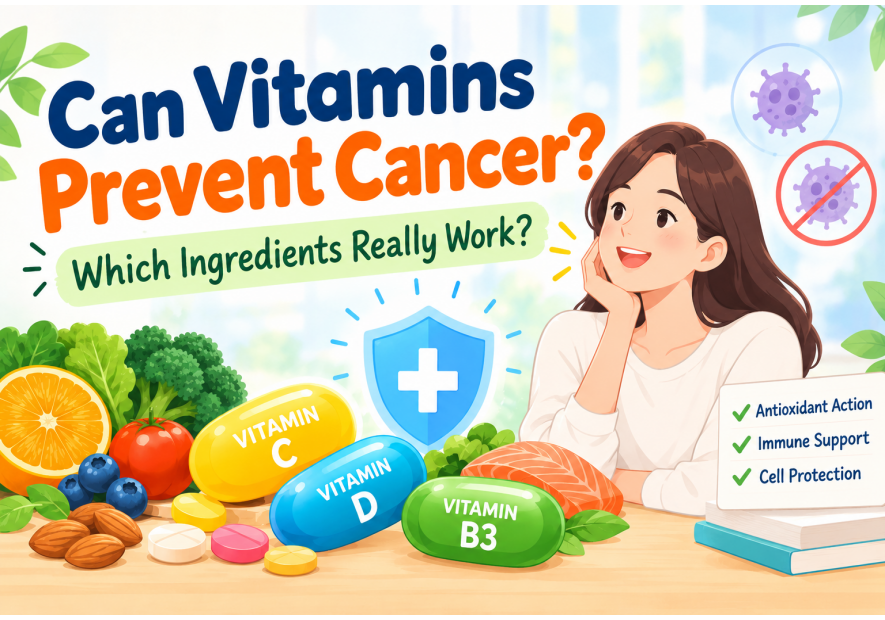
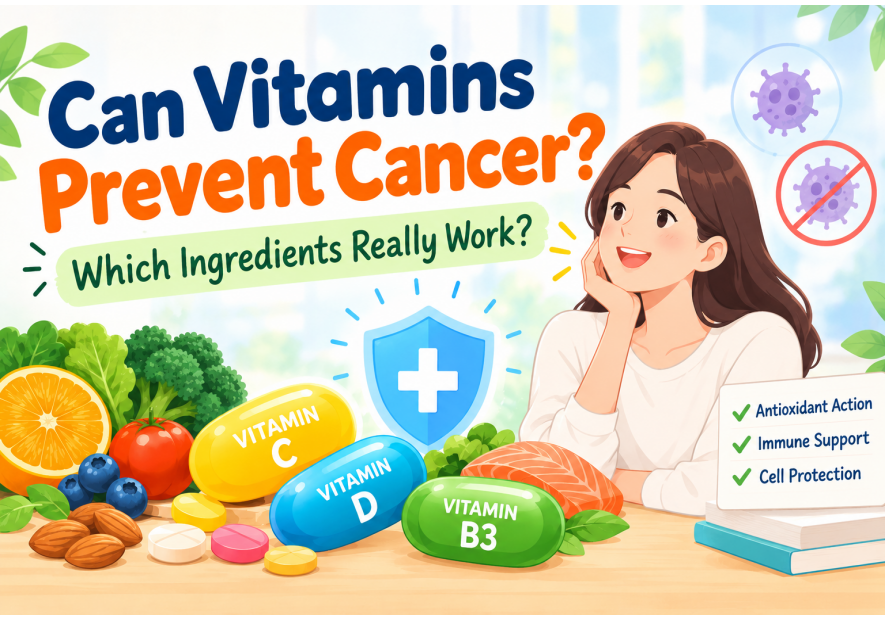
Can vitamins prevent cancer? Which ones are actually effective?
Do the vitamin supplements you take every morning for your health really help prevent cancer? It’s reassuring to hear that "taking vitamins is good for cancer prevention." However, the medical community remains divided on whether the pill-form supplements we buy at grocery stores or pharmacies can truly prevent cancer. As we age, concerns about our health and the risk of cancer often grow, leading us to hope that taking vitamins will be beneficial. Yet, not all "healthy" vitamins are effective at preventing cancer—and in some cases, excessive intake can actually be harmful. Have you ever wondered whether the vitamins you take without much thought are acting as a "remedy" or a "poison" for your body? In today’s article, we will clarify which vitamins are genuinely effective for cancer prevention and explain how to take them properly.
Can vitamins prevent cancer?
In our daily lives, as we breathe and digest food, our bodies naturally produce harmful substances called "reactive oxygen species" (ROS), which can attack cells and potentially lead to cancer. Antioxidant vitamins—such as vitamin C and vitamin E—act like shields, capturing these reactive oxygen species and helping to reduce cellular damage and oxidative stress. This antioxidant mechanism has naturally given rise to the expectation that taking vitamins could help prevent cancer. However, prominent cancer research organizations, including the World Cancer Research Fund (WCRF) and the U.S. National Cancer Institute (NCI), point out that "antioxidant activity at the cellular level does not necessarily translate directly into cancer prevention in humans." The process by which cancer develops in the human body is far too complex to be completely halted simply by eliminating reactive oxygen species. Ultimately, while it is true that the antioxidant properties of certain vitamins can help protect cells and potentially aid in cancer prevention, it is important to remember that a few vitamin supplements cannot serve as a "panacea" or a cure-all for preventing cancer.
Three Key Vitamins Proven by Research to Help Prevent Cancer
While vitamin supplements are not a panacea, research consistently indicates that certain nutrients can help prevent or suppress cancer. Vitamin C, for instance, acts as a potent antioxidant; it eliminates harmful free radicals and activates immune cells, thereby strengthening the body’s fundamental defenses. Vitamin D is perhaps the most notable nutrient in this regard; studies from Harvard University and the National Institutes of Health (NIH) suggest that maintaining adequate blood levels of vitamin D can inhibit cellular mutations, potentially lowering the risk of developing colon and breast cancer. Furthermore, large-scale clinical analyses indicate that vitamin D may contribute to lower mortality rates among cancer patients, making it a key subject of ongoing medical research. Finally, vitamin B3 (niacin) aids in the repair of damaged DNA and helps mitigate skin damage caused by ultraviolet (UV) radiation. In fact, a clinical trial published in the *New England Journal of Medicine* (NEJM) demonstrated that vitamin B3 reduced the recurrence rate of skin cancer in high-risk patients. In short, vitamins C, D, and B3 are essential nutrients that play a tangible role in repairing cellular damage and supporting the immune system.
Cancer-Preventive Supplements: Who Needs Them, and What Should You Consider Before Taking Them?
So, who actually needs cancer-preventive supplements? According to clinical guidelines from the U.S. Preventive Services Task Force (USPSTF), it is not recommended for healthy adults who already maintain a balanced diet to take multivitamins solely for the purpose of cancer prevention. However, for individuals with irregular eating habits, older adults, or those at a higher risk of nutritional deficiency due to underlying medical conditions, such supplements—taken under professional guidance—may be beneficial. It is important to remember that "too much of a good thing can be harmful"; high doses of vitamins can lead to unexpected health issues, such as kidney stones or liver damage. Therefore, the key to taking vitamins correctly is not to blindly follow what others are doing, but to carefully check the ingredients and daily recommended dosages of the supplements you are taking to avoid redundancy. Making smart choices by selecting only the nutrients you truly need—and checking for potential interactions with any other medications you may be taking—is the first step toward safeguarding your health.
Conclusion
While vitamins play a crucial role in maintaining normal bodily functions and protecting cells, not all vitamins are effective at preventing cancer. Although vitamins such as C, D, and B3 have been studied in the context of cancer prevention, the preventive benefits of specific supplements have not been definitively proven for everyone. In particular, taking high doses of vitamins with the intent of preventing cancer can actually be harmful to your health, so caution is advised. To reduce the risk of cancer, rather than relying solely on supplements, it is important to maintain a balanced diet rich in vegetables and fruits, avoid smoking, limit alcohol consumption, and engage in regular physical activity. If you suspect a nutritional deficiency or believe you may need supplements, consult with a healthcare professional to choose the right vitamins for your specific health needs.
Frequently Asked Questions (FAQ)
Q. Does taking high-dose vitamins or antioxidant supplements increase the cancer-preventing effect?
A. No. High-dose supplements can cause side effects or drug interactions, and since some ingredients may actually increase the risk of cancer in certain populations, it is important to adhere to the appropriate intake.
Q. Can taking Vitamin D reduce the risk of colorectal or breast cancer?
A. While some observational studies have shown a link between Vitamin D levels and the risk of developing certain cancers, the effect of supplements in preventing cancer has not yet been definitively proven.
Q. Is it okay to take high doses (megadoses) of Vitamin C for cancer prevention?
A. There is still a lack of clear medical evidence that taking megadoses prevents cancer, and it may cause gastrointestinal disorders or kidney stones depending on the individual. Rather than taking high doses indiscriminately, we recommend adhering to the daily recommended dosage or making a decision after consulting with a specialist.
Source
1. Vitamin and Mineral Supplements for the Primary Prevention of Cardiovascular Disease and Cancer/ Authors: Jennifer M. Guallar, et al.
2. Vitamin D and Cancer: Current Evidence and Future Directions/ Authors: Various researchers
3. The Effect of Vitamin D Supplementation on Cancer Incidence and Mortality/ Authors: JoAnn E. Manson, et al.
4. A Phase 3 Randomized Trial of Nicotinamide for Skin-Cancer Chemoprevention/ Authors: Andrew C. Chen, et al.

Leave a comment