









Breaking News! Promise in reducing breast cancer risk
Breast cancer is the most diagnosed cancer globally, with over 2 million new cases diagnosed annually. [1] Breast cancer prevention has focused on modifiable risk factors such as obesity, dietary patterns, physical inactivity, as well as tobacco and alcohol use.[2] Endogenous estrogens also play a role in breast cancer risk and are potentially modifiable by lifestyle, diet and bioactive compounds in food and certain nutritional supplements.[3] Estrone (E1) and Estradiol (E2), two types of estrogen compounds, are hydroxylated into metabolites by three major competing pathways to 4-hydroxyestrone (4-OHE1) and 16α-hydroxyestrone (16αOHE1), which are associated with an increased risk of breast cancer, as well as 2-hydroxyestrone (2- OHE1), which is considered a protective metabolite against breast cancer.[4] The ratio of urinary 2- OHE1:16α-OHE1 is a common biomarker of breast cancer risk, with higher ratios associated with a lower risk.[5] In the study of 114 pre-menopausal women, EstroSense use led to markedly higher urinary levels of the protective 2-OHE1 and lower levels of the more dangerous 16α-OHE1 compared to placebo. “Balancing the ratio of 2-OHE1:16α-OHE1 is important to lower breast cancer risk, and we now have an additional tool in our toolbox to aid in the prevention against this form of cancer”, says Dr. Jennifer Brix, ND who was one of the Principal Investigators in this study. Other strengths of the study were that it was a randomized, multi-centre (5 sites in BC), cross-over design with a long intervention period (3 menstrual cycles per EstroSense or placebo treatment), with minimal dietary changes and an ethnically diverse study population (26% non-European). The cross-over design allowed subjects to act as their control, removing the effect of intra-participant variation, thereby increasing the power to detect differences, and providing more statistically significant results.
Reference:
Green T, See J, Schauch M, et al. A randomized, double-blind, placebo-controlled, cross-over trial to evaluate the effect of EstroSense® on 2-hydroxyestrone:16α-hydroxyestrone ratio in premenopausal women [published online ahead of print, 2022 Oct 6]. J Complement Integr Med. 2022;10.1515/jcim-2022-0301. doi:10.1515/jcim2022-0301
[1] Sung H, Ferlay J, Siegel RL, Laversanne M, Soerjomataram I, Jemal A, et al. Global cancer statistics 2020: GLOBOCAN estimates of incidence and mortality worldwide for 36 cancers in 185 countries. CA Cancer J Clin 2021;71:209–49. [2] Daly AA, Rolph R, Cutress RI, Copson ER. A review of modifiable risk factors in young women for the prevention of breast cancer. Breast Cancer 2021;13:241–57. [3] Li Y, Li S, Meng X, Gan RY, Zhang JJ, Li HB. Dietary natural products for prevention and treatment of breast cancer. Nutrients 2017;9: 728–66. [4]Samavat H, Kurzer MS. Estrogen metabolism and breast cancer. Cancer Lett 2015;356:231–43. [5] Obi N, Vrieling A, Heinz J, Chang-Claude J. Estrogen metabolite ratio: is the 2-hydroxyestrone to 16α-hydroxyestrone ratio predictive for breast cancer? Int J Womens Health 2011;3:37–51.
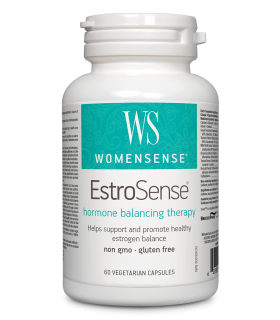
EstroSense 60 Vegi Capsules
Product Code : WMS00532
EstroSense is a complete natural formula containing calcium D-glucarate, indole-3-carbinol, green tea extract, turmeric extract, rosemary extract, lycopene, sulforaphane, and milk thistle seed extract. Health care practitioners recommend EstroSense to help promote healthy estrogen metabolism....
-10% IN CART
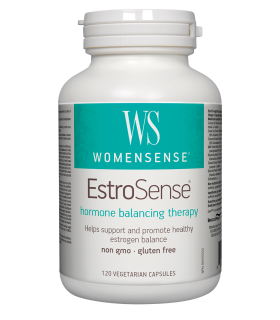
EstroSense 120 Vegi Capsules
Product Code : WMS00533
EstroSense is a complete natural formula containing calcium D-glucarate, indole-3-carbinol, green tea extract, turmeric extract, rosemary extract, lycopene, sulforaphane, and milk thistle seed extract. Health care practitioners recommend EstroSense to help promote healthy estrogen metabolism....
-10% IN CART
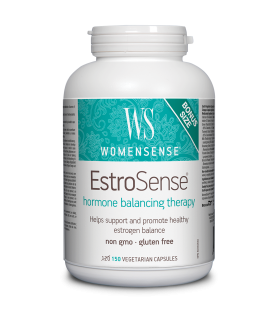
EstroSense 150 Vegi Capsules BONUS SIZE
Product Code : WMS00534
EstroSense is a complete natural formula containing calcium D-glucarate, indole-3-carbinol, green tea extract, turmeric extract, rosemary extract, lycopene, sulforaphane, and milk thistle seed extract. Health care practitioners recommend EstroSense to help promote healthy estrogen metabolism....
-10% IN CART
- Hidden Deal In Cart
Leave a comment