










Double the Benefits or Double the Risk Navigating Supplement Combinations
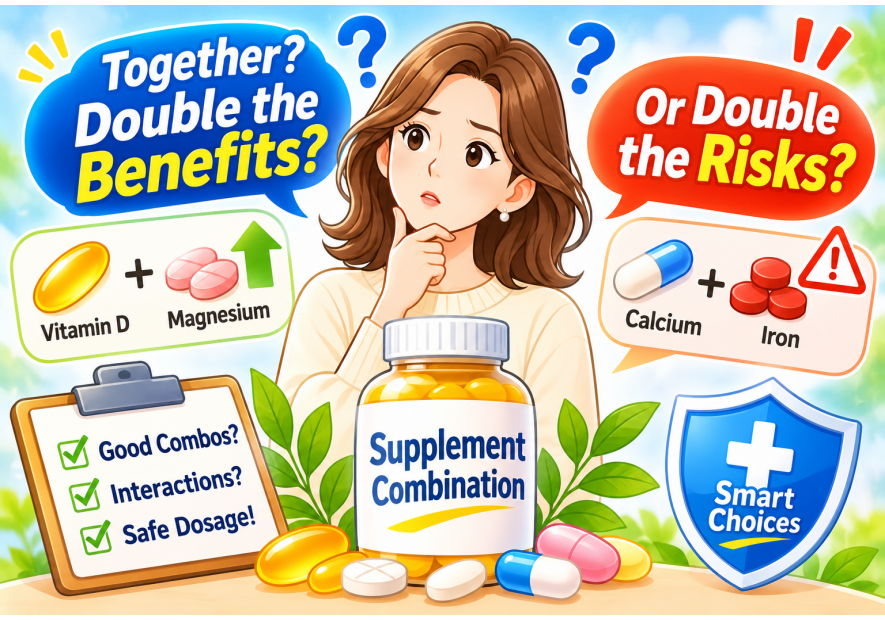
Are you sure you’re taking your daily supplements correctly? Do you assume that taking multiple supplements together automatically leads to greater health benefits? In reality, while some supplements can enhance each other’s absorption and effectiveness, others may actually hinder absorption—diminishing the very benefits you were hoping for. It is also crucial to be aware that combining supplements with prescription medications can alter how those drugs work or lead to unexpected side effects. If you are currently taking medication for blood pressure, diabetes, or blood clotting, certain supplement combinations—chosen without careful consideration—could place an unnecessary strain on your health. In this guide, we’ll break down everything you need to know: the "power pairings" that create a synergistic effect, the combinations you should strictly avoid, and the potential for interactions with your medications. Take just three minutes to check whether your current supplement regimen is safe!
Top 4 Supplement Combinations for Enhanced Effectiveness and Synergistic Benefits
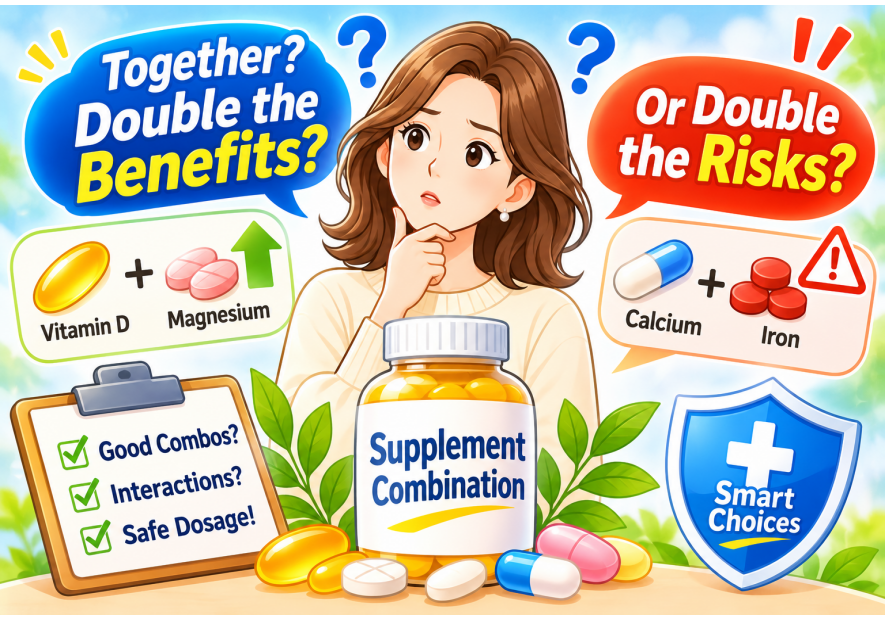
Certain nutritional supplements pair well together, compensating for each other's shortcomings and boosting the overall utilization of nutrients. The first combination is vitamin D and magnesium; magnesium plays a role in the metabolism and activation of vitamin D, supporting its proper function. The second is vitamin D and calcium; vitamin D facilitates the absorption of calcium in the intestines, which is crucial for maintaining bone health. The third is vitamin C and iron; vitamin C enhances the absorption of non-heme iron—the type found in plant-based foods—making it particularly beneficial for those with insufficient iron intake. The fourth is omega-3 fatty acids and vitamin D; due to their lipid-friendly nature, taking them together—or alongside a meal containing fat—stimulates the secretion of bile acids, which maximizes their absorption in the gut. Research from the Harvard T.H. Chan School of Public Health and the National Institutes of Health (NIH) underscores that, compared to taking nutrients in isolation, a strategy that accounts for beneficial interactions between nutrients is far more effective for enhancing bioavailability.
Could a seemingly good combination actually be harmful? Nutrient pairings that hinder absorption
While many people take various supplements for their health, not all nutrients work well together. A prime example is the combination of calcium and iron; calcium can interfere with the absorption of iron, so those who need iron supplementation should consider taking these at different times. Similarly, taking zinc and iron together can affect the absorption of both—according to data on dietary supplements from the U.S. National Institutes of Health (NIH), consuming 25 mg or more of iron can reduce zinc absorption. On the other hand, calcium and magnesium do not necessarily need to be avoided when taken together at typical intake levels, and there is insufficient evidence to suggest they must always be consumed at separate times. Another factor to watch out for is phytate—a compound found in grains and legumes—which can bind to minerals like iron and zinc, reducing their absorption in the body. So, what is the solution? It is advisable to take iron and calcium supplements at different times whenever possible, and to leave a gap of about two hours between high-dose iron and zinc supplements. However, since a two-hour interval is not strictly necessary for every type of supplement, you should always consult the specific instructions for each product while also considering your own individual nutritional status.
Supplements and Medications: The Hidden Dangers of Drug Interactions
While nutritional supplements are intended to support health, taking them alongside certain prescription medications can reduce drug efficacy or lead to unexpected side effects. A classic example is the combination of vitamin K and warfarin (an anticoagulant); because vitamin K plays a role in blood clotting, sudden changes in its intake can alter the anticoagulant effect of warfarin and affect blood-clotting markers (such as the INR). The U.S. National Institutes of Health (NIH) advises individuals taking warfarin to maintain a consistent intake of vitamin K. Furthermore, taking calcium, iron, or magnesium alongside thyroid hormone replacement therapy (such as Synthroid) can impair the absorption of the medication; it is generally recommended to space out the intake of these minerals—especially calcium and iron—from thyroid medication by at least four hours. Similarly, bisphosphonates—a class of drugs used to treat osteoporosis—can have their absorption hindered by minerals like calcium or magnesium, making it essential to follow specific dosing guidelines for each medication. Tetracycline and quinolone antibiotics can also bind with iron, calcium, or magnesium, which reduces their absorption. Meanwhile, certain supplements—such as omega-3 fatty acids, ginkgo biloba, and garlic extract—may interact with anticoagulants or antiplatelet agents, potentially increasing the risk of bleeding. Both Health Canada and the National Center for Complementary and Integrative Health (NCCIH) under the U.S. NIH recommend consulting with a healthcare professional before combining prescription medications with natural health products or nutritional supplements to check for potential interactions. Ultimately, nutritional supplements should not be viewed as separate from medications; checking the ingredients of both your current medications and any supplements you take is the first step toward safe health management.
Conclusion: It’s better to combine supplements intelligently than to simply take a large quantity.
When it comes to supplements, what you take them with is just as important as which ingredients you choose. Some combinations—like vitamin D and magnesium—can enhance each other’s functions, while others—such as calcium and iron—may interfere with absorption. Furthermore, extra caution is required when taking supplements alongside prescription medications to avoid reduced efficacy or unexpected side effects. If you take multiple types of supplements, be sure to check for overlapping ingredients, total daily intake, optimal timing, and potential drug interactions. After all, supplements intended to support your health shouldn't end up becoming a burden on it. Why not take a fresh look at the supplements you’re currently taking today?
Frequently Asked Questions (FAQ)
Q. Is it better to take nutritional supplements before or after a meal?
A. It depends on the specific ingredients. B-complex vitamins and probiotics are best absorbed or remain more viable when taken on an empty stomach. Conversely, fat-soluble vitamins (A, D, E, and K), omega-3 fatty acids, and minerals should be taken after a meal to minimize gastrointestinal discomfort and improve absorption.
Q. I have a large number of pills to take; should I spread them out throughout the day (morning, lunch, and evening)?
A. Yes, it is much more effective to spread them out. Taking too many supplements at once can cause minerals to compete for absorption, which reduces their overall efficacy. It is better to distribute your intake—for example, taking some on an empty stomach in the morning, others after a meal, and some before bedtime—depending on the specific characteristics of each supplement.
Q. Should I stop taking nutritional supplements entirely if I am currently on prescription medication?
A. You do not necessarily need to stop taking all supplements, but certain ingredients can interfere with the absorption of prescription drugs or cause adverse side effects. If you are taking medication for a serious medical condition—such as anticoagulants or thyroid medication—it is safest to leave a gap of at least 2–4 hours between taking your medication and your supplements, or to consult with your doctor or pharmacist before continuing their use.
source
1. Food supplement vitamins, minerals, amino-acids, fatty acids, phenolic and alkaloid-based substances: An overview of their interaction with drugs- Authors: Maria Lopes, Manuel A. Coimbra, Maria do Céu Costa, Fernando Ramos
2. Warfarin and food, herbal or dietary supplement interactions: A systematic review- Authors: Christina San San Tan, Shaun Wen Huey Lee
3. Levothyroxine Interactions with Food and Dietary Supplements—A Systematic Review- Authors: Agnieszka Wiesner, Danuta Gajewska, Paweł Paśko
4. Drug–Nutrient Interactions: A Broad View with Implications for Practice- Authors: Not specified in the retrieved abstract
5. Adverse Effects of Medications on Micronutrient Status: From Evidence to Guidelines- Authors: Michael S. Daniels, Brian I. Park, Diane L. McKay

Leave a comment