












Is it a supplement only for athletes? The benefits of Creatine and safe consumption methods

The number of people seeking creatine is also increasing. Especially as muscle mass and strength naturally decline with age, anyone who exercises diligently has likely heard of creatine at least once. But is it really a supplement necessary only for athletes? Recently, as it has become known that creatine plays a deep role not only in muscle mass and athletic performance but also in recovering from daily fatigue and maintaining brain health, it is worth paying attention to its role. However, there is a considerable amount of misinformation circulating, such as claims that "the more you consume, the better the effect" or that it "unconditionally places a burden on the kidneys." Therefore, let's explore the true benefits of creatine and safe, side-effect-free consumption methods that help not only fitness enthusiasts but also modern people living exhausted lives.
Creatine Steps Out of the Gym: The Misconception That It Is Exclusive to Athletes
When we think of creatine, we often picture people working out at the gym first, but in fact, creatine is not a supplement exclusive to athletes. Creatine is a substance naturally produced in our bodies, with about 1 to 2 grams synthesized daily in organs such as the liver and kidneys. It is also naturally found in meats and fish, such as beef, so some can be obtained through our regular diet. However, to meet the generally expected daily intake of 3 to 5 grams solely through food, one would need to consume a significant amount of meat. In particular, meeting the required amount solely from beef could require over 1 kg per day, which is a substantial practical burden. Therefore, creatine supplements are utilized as a convenient and efficient way to supplement amounts that may be lacking in our diet alone. We now need to view creatine not merely as a "gym supplement," but as a nutrient that aids our body's energy metabolism.
Why Creatine Monohydrate Is the Most Widely Used Form
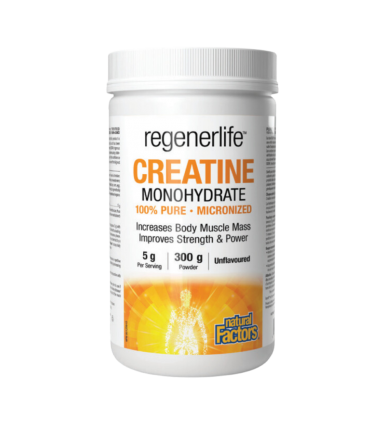
Although various types of creatine are available on the market, the one that experts unanimously recommend is Creatine Monohydrate. This is because it is the form whose safety and efficacy have been most definitively verified through decades of numerous academic studies and clinical trials. Not only does it boast excellent absorption rates in the body, but it also offers unrivaled value for money compared to expensive modified creatines. Recently, various forms have emerged that claim to have improved absorption rates or efficacy, but they have not necessarily been proven to be superior to monohydrate. There is no need to be swayed by complex and flashy marketing slogans to seek out expensive products; choosing the most basic yet perfect monohydrate is the smartest approach.
Three Benefits of Creatine: More Than Just Muscle Growth
The benefits of creatine extend beyond simply building muscle. First, it can enhance athletic performance and aid in post-workout recovery by assisting in the resynthesis of ATP (Adenosine Triphosphate), the energy source for cells. Second, as the brain is also an organ that consumes a significant amount of energy, research is being conducted on the potential of creatine to help manage mental fatigue and maintain cognitive function. In particular, studies have shown positive effects on memory and cognitive performance in situations of sleep deprivation. Third, it is gaining attention as a nutritional strategy for preventing sarcopenia, as it can help slow the decline in muscle mass and strength among middle-aged and older adults. Vegetarians who consume less meat and fish may have relatively low creatine intake, so they may consider creatine supplements. As such, creatine is a reliable energy booster that goes beyond simply shaping muscles to revitalizing both body and mind.
Creatine: Are There Any Side Effects? How to Consume It Safely
To start with the safety aspect, which you were likely most curious about, creatine is a supplement whose safety has been sufficiently verified through numerous studies on healthy adults. However, because creatine has the property of retaining water in muscles, you may experience a temporary increase in weight during the initial stages of consumption. You can rest assured that this is not fat but a natural phenomenon of water accumulating within the muscles. If you have kidney disease or kidney function issues, caution is required depending on your individual condition, so it is recommended to consult a professional before consumption. Long-term studies on healthy adults have also shown generally good safety for the general recommended dosage of creatine. Therefore, rather than consuming large amounts indiscriminately, it is important to consume an appropriate amount consistently and consider your health condition.
Conclusion:
Creatine should no longer be viewed as a supplement solely for gym-goers. Research is ongoing regarding its potential not only for muscle strength and exercise performance but also for energy metabolism, recovery, and cognitive function. It is particularly worth considering as it can be utilized to manage muscle health in middle-aged and older adults. For healthy adults, the most important factor is consistently consuming the general recommended dosage; if you are just starting out, creatine monohydrate is a reasonable choice. However, if you have underlying conditions such as kidney disease, it is safer to consult a medical professional before consumption. Ultimately, the key to creatine is not consuming large amounts, but taking it consistently and correctly according to your body's condition.
Frequently Asked Questions (FAQ)
Q. How much creatine should I take per day?
A. Generally, the widely used method is to consistently consume about 3 to 5g of creatine monohydrate per day. "Loading" by taking a large amount initially is not essential; consistent intake is more important.
Q. Should I take creatine even on days I don't exercise?
A. Yes, taking it consistently even on non-workout days helps maintain creatine stores in the muscles. It is not necessary to take it at specific times before or after exercise; it is recommended to take it consistently every day.
Q. I've heard that taking creatine causes hair loss. Is this true?
A. This is a misconception stemming from some small-scale past studies and has not been clearly scientifically proven to date. Numerous subsequent studies have not confirmed a direct causal relationship with hair loss, so you can take it with peace of mind.
Q. When is the most effective time to take it during the day?
A. The absorption rate in the body is highest when consumed immediately after exercise or a meal, along with carbohydrates and protein, due to the insulin response. However, the most important thing is to eat consistently at a convenient time every day without forgetting.
source:
Use of creatine in the elderly and evidence for effects on cognitive function in young and old/ Darren G. Candow, Philip D. Chilibeck, Darren E. R. Forbes
Effect of creatine supplementation during resistance training on lean tissue mass and muscular strength in older adults: a meta-analysis/ Scott C. Forbes, Darren G. Candow, Jonathan P. Little, Philip D. Chilibeck
Bioavailability, efficacy, and safety of creatine supplements/ Ralf Jäger, Martin Purpura, A. Shao, T. Inoue, R. B. Kreider
Creatine: The Power Supplement/ Avery Publishing Group
The effects of creatine supplementation on cognitive function in adults: a systematic review and meta-analysis./Xu, C., Bi, S., Zhang, W., & Luo, L. (2024)

Leave a comment