
















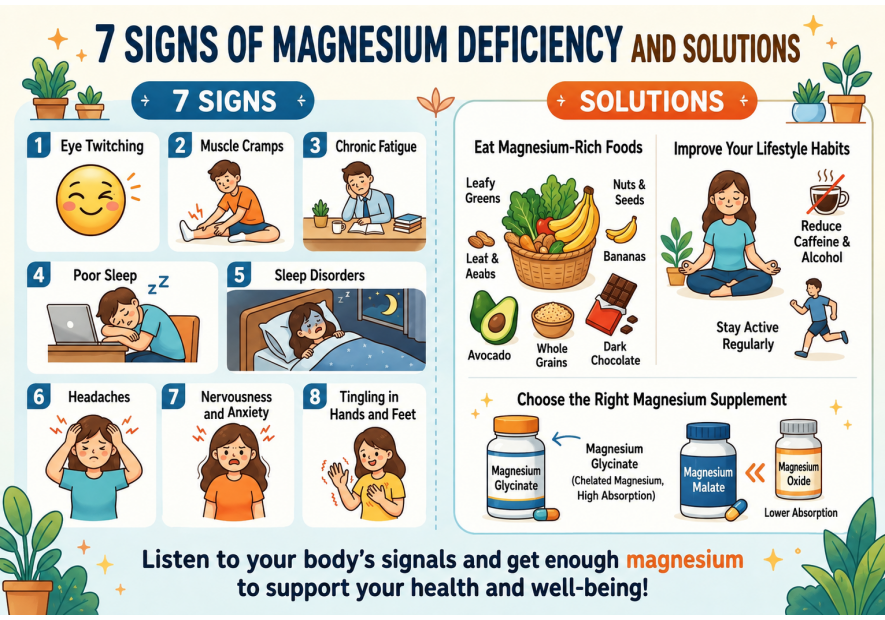

7 Signs of Magnesium Deficiency and Solutions
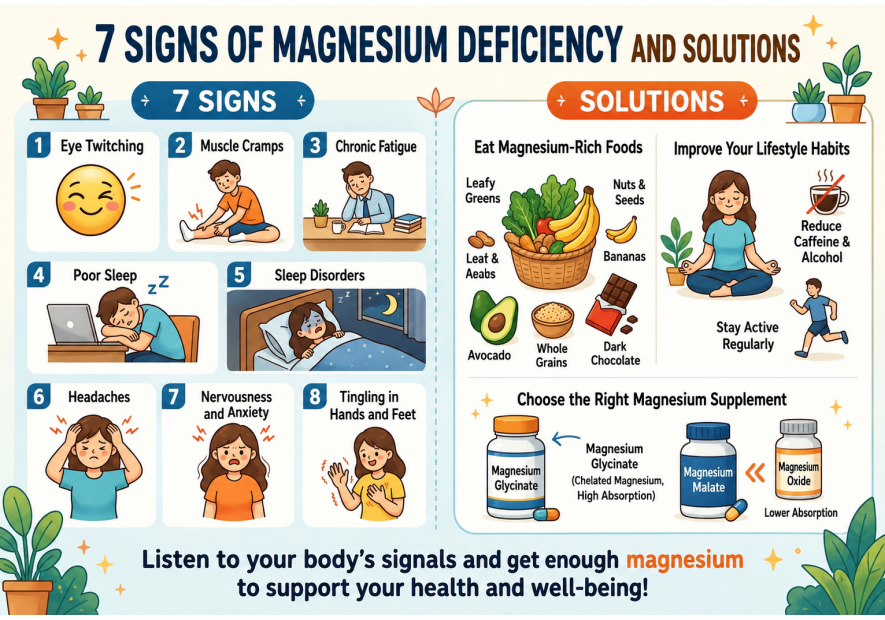
Have you ever woken up in the morning with your eyelids twitching, experienced unexplained body aches, or felt fatigued even after a good night's sleep? It is easy to dismiss these symptoms by thinking, "I'm just too tired lately," but in fact, they can be powerful warning signs from your body. When magnesium—which is involved in the action of over 300 enzymes within the body—becomes deficient, the body begins sending immediate signals of imbalance. Magnesium may be unknowingly depleted from your body due to a daily cup of coffee and excessive stress; could your body be currently deficient in magnesium as well? In today's article, we will explore the seven typical signs of magnesium deficiency and find sure solutions to replenish it quickly and easily.
Symptoms of Magnesium Deficiency: 7 Signals Your Body Sends
Magnesium plays a key role in muscle function, energy production, cardiovascular health, and bone metabolism. Magnesium deficiency is common among modern people due to diets heavy in processed foods, stress, alcohol consumption, and vitamin D deficiency. The following are the seven common warning signs:
1. Muscle cramps, spasms, and eyelid twitching
Magnesium helps relax muscles; a deficiency can cause muscles to contract excessively.
2. Chronic fatigue and lethargy
Since magnesium is involved in the production of ATP (cellular energy), a deficiency leads to easy exhaustion and severe fatigue.
3. Sleep disorders and insomnia
As it is involved in regulating sedative neurotransmitters such as GABA and muscle relaxation, a deficiency can lower the quality of sleep.
4. Increased headaches and migraines
As it is involved in regulating blood vessel constriction and relaxation and in neurotransmission, a deficiency may increase the frequency of headaches.
5. Anxiety, Depression, and Mood Swings
It is involved in serotonin synthesis and the regulation of cortisol (stress hormone), which can cause mood swings and anxiety.
6. Heart Palpitations and Arrhythmia
It is involved in the electrical stability of heart muscle cells and potassium balance, which may lead to irregular heartbeats.
7. Digestive Disorders and Constipation
As it is a mineral that aids intestinal peristalsis, a deficiency can make bowel movements difficult and cause abdominal bloating.
Why Is Magnesium Deficiency? The Reason Modern People Suffer from Magnesium Famine
You may wonder, “I eat well, so why am I lacking magnesium?” The primary cause of magnesium deficiency is a dietary habit that fails to consume enough magnesium-rich foods, such as vegetables, nuts, and whole grains. In particular, a diet heavy in processed foods naturally reduces magnesium intake, while excessive caffeine consumption and alcohol drinking can increase magnesium loss through urine. A lifestyle involving high stress or excessive sweating can also affect magnesium levels. Furthermore, certain medications or specific health conditions can influence magnesium absorption and its maintenance within the body. Therefore, when examining the causes of magnesium deficiency, it is necessary to consider not only the amount consumed but also its absorption and loss. Checking your daily dietary and lifestyle habits can be the first step in preventing magnesium deficiency.
Replenishing Magnesium Through Your Diet: Magnesium-Rich Foods to Start Including Today
The most natural and safe way to replenish magnesium in your body lies right in your daily meals. Dark green vegetables like spinach and avocados are rich in magnesium, making them excellent additions to salads or side dishes. For snacks, we recommend eating a banana or a handful of nuts such as almonds or peas. Additionally, cooking rice with whole grains like brown rice or oats instead of refined white rice, and enjoying a light piece of dark chocolate when feeling peckish, are excellent ways to supplement magnesium. By effectively utilizing ingredients readily available in your daily life, you can meet your nutritional needs healthily without relying on supplements. The key is to consume a balanced variety of ingredients rather than relying on a single food. Start with a small habit: adding one or two magnesium-rich foods to your table today.
How to Choose Supplements to Double Effectiveness and Tips to Improve Absorption
When selecting magnesium supplements, it is important to check the form and actual content of the magnesium, rather than simply looking at the dosage. Generally, chelated or organic salt forms such as magnesium glycinate and citrate tend to be absorbed better than magnesium oxide, but this may vary depending on the product and individual conditions. On the other hand, while magnesium oxide has a relatively lower absorption rate, it has the advantage of a high magnesium content and a lower price. Regarding magnesium intake, check the single serving size and elemental magnesium content of the product; if you experience gastrointestinal discomfort, you may consider taking it with a meal. The timing of magnesium intake can vary depending on individual goals and product characteristics, so it is not strictly necessary to take it at a specific time. Additionally, if magnesium side effects such as diarrhea or abdominal pain occur, it is advisable to review the dosage or form of intake. Above all, having the seven warning signs does not mean you must take a magnesium supplement unconditionally; if symptoms persist, it is safer to check for other underlying causes as well.
Conclusion
Magnesium is an important mineral involved in various bodily functions, including muscle and nerve function and energy production. Did you carefully review the signs, causes, and methods for replenishing magnesium deficiency discussed so far? Twitching under the eyes or sluggish fatigue are not just passing daily routines; they can be valuable messages indicating that your body needs deeper rest and nutrition. Try implementing the magnesium-rich diet introduced today—such as vegetables, nuts, whole grains, and legumes—one by one. If it is difficult to obtain sufficient intake through diet alone, choosing a magnesium supplement tailored to your needs is also an option. A single small change in your eating habits can make every morning feel much lighter and more energetic. Starting today, I hope you listen a little more closely to the signals your body is sending and begin a healthy and vibrant day!
Frequently Asked Questions (FAQ)
Q. Is taking more magnesium more effective?
A. No, it is not. Consuming more than necessary can lead to side effects such as diarrhea or abdominal pain. It is safest to consult a healthcare professional before taking it, especially if you have kidney problems or are taking medication.
Q. When is the best time to take magnesium as a supplement?
A. Since magnesium helps stabilize nerves and relax muscles to aid sleep, it is recommended to take it after dinner or 30 minutes to 1 hour before bedtime. However, if you have a sensitive stomach, it is best to take it immediately after a meal to prevent heartburn.
Q. Are there any supplements that are good to take with magnesium, or combinations to avoid?
A. Vitamin D and calcium are a perfect match for magnesium absorption; in particular, consuming calcium and magnesium in a 2:1 ratio is ideal. On the other hand, taking them simultaneously with high-dose calcium or iron supplements, or certain antibiotics, interferes with each other's absorption, so it is recommended to take them at least 2 hours apart.
Sources
1.Subclinical Magnesium Deficiency: A Principal Driver of Cardiovascular Disease and a Public Health Crisis/ Authors: James J. DiNicolantonio, James H. O’Keefe, and Subhash C. Wilson
2.Magnesium in Prevention and Therapy/ Authors: Uwe Grober, Joachim Schmidt, and Klaus Kisters
3.Magnesium in Man: Implications for Health and Disease/ Authors: Joost G. J. Hoenderop, René J. M. Bindels, and Jeroen H. F. de Baaij
4.Magnesium: The Missing Link in Health and Disease/ Author: Dr. Carolyn Dean

Leave a comment