













Do You Really Need to Take Probiotics When Dieting? The Surprising Link Between Gut Health and Weight Management
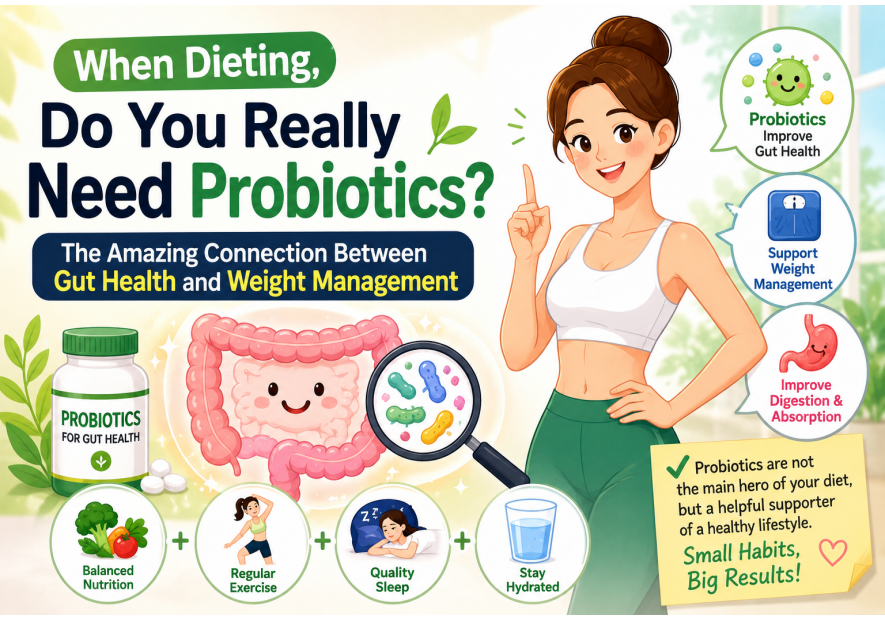
When starting a diet, people prioritize their diet and exercise, but surprisingly, it is easy to overlook gut health. However, recently, an increasing number of people are becoming interested in diet probiotics alongside weight management. Naturally, this leads to the question: "Can taking probiotics really help you lose weight?" This is because attention is being drawn to the interconnectedness of the gut microbiome, dietary habits, and metabolic health. Of course, probiotics alone will not cause weight to drop automatically. So, let's explore how probiotics can help with dieting and whether they are a must-have.
Why Is Dieting Hard? The Hidden Correlation Between Gut Microbes and Weight
If you find it difficult to manage your weight as much as you expected despite dieting, you need to pay attention not only to your diet but also to your gut microbiome. Gut microbes ferment dietary fiber, produce various metabolic byproducts, and play a role in maintaining a healthy gut environment. However, when this microbial balance is disrupted, the body swells easily, satiety signals become erratic, and the body moves toward storing fat more efficiently. That is why the saying "a tendency to gain weight easily = a gut environment problem," often mentioned by many experts, is not without reason. In fact, research from Harvard and the National Institute of Health in Japan has shown that obesity can be predicted solely based on the composition of gut microbes. This suggests that the reason dieting is difficult may not be a lack of willpower, but rather an imbalance of the microbes in your gut. Correcting this imbalance often makes dieting much easier.
The Real Reason Probiotics Help with Dieting
The reason probiotics help with dieting is not simply because they are "weight-loss bacteria," but because they simultaneously stimulate three key mechanisms: appetite, metabolism, and inflammation. In particular, the metabolic products produced by gut microbes can influence satiety and appetite signals, and gut health is linked to the overall metabolic environment. Some probiotics increase satiety, helping to reduce overeating and late-night snacking, while the metabolic products produced in the gut help boost fat-burning efficiency. Additionally, high levels of gut inflammation hinder weight loss, but probiotics alleviate this inflammation, helping the body return to "weight-loss mode." Consequently, recent research consistently shows that probiotics have a positive impact on weight management.
How to Choose Diet Probiotics! Check the Strain, Guaranteed CFU, and Prebiotics
When choosing diet probiotics, it is important to examine the strain and the method of consumption together, rather than simply looking at the number of bacteria. First, you must check which strains are included; for weight loss purposes, strains that stabilize the intestinal environment and promote satiety are particularly advantageous. While Lactobacillus and Bifidobacterium strains are commonly used, it is difficult to conclude that a specific strain is more beneficial for everyone's weight management. In particular, you should check the specific strain name and guaranteed CFU indicated on the product. Since too little results in minimal effect and too much is not necessarily better, the key is to choose the appropriate amount that suits your gut condition. Additionally, if prebiotics (food for probiotics) are included, the probiotics survive longer in the intestines, ensuring the effects are well maintained.
How Should You Consume Probiotics to Maximize Their Effectiveness While Dieting?
The perceived effects of probiotics during a diet vary significantly depending on when and how you take them. Generally, consistently consuming them on an empty stomach in the morning or after meals increases the rate at which they reach the intestines, resulting in better results. Furthermore, rather than drastically cutting back on food, consuming foods rich in dietary fiber—such as vegetables, whole grains, and legumes—along with probiotics helps them survive longer in the gut, aiding in satiety and stabilizing metabolic flow. Adding regular exercise and sufficient sleep to this allows you to build solid lifestyle habits necessary for weight management. The most important point here is that taking probiotics alone does not guarantee weight loss. Probiotics are not a substitute for weight loss; rather, they serve as aids that complement a healthy diet and lifestyle. Ultimately, the key is to manage your diet, exercise, and sleep alongside your consistent probiotic intake.
Conclusion
When dieting, probiotics are not a magic solution that replaces weight loss, but rather an assistant that supports gut health and healthy lifestyle habits. Many people are now realizing that the reason dieting doesn't go well isn't solely due to willpower or exercise levels. Ultimately, the key lies in how well you maintain a healthy gut environment, and probiotics play a more significant role than you might think in this process. They act as a helper, assisting the body in returning to "weight-loss mode" by regulating appetite, improving metabolic flow, and alleviating inflammation. While probiotics alone won't cause sudden weight loss, they certainly lay the foundation for making dieting much easier by restoring the balance of gut microorganisms.
Frequently Asked Questions (FAQ)
Q. Which probiotic strains are more effective for weight loss?
A. Lactobacillus and Bifidobacterium strains are beneficial for improving gut health, satiety, and metabolic flow.
Q. What are the essential factors to check when choosing probiotics for weight loss?
A. You should check the strain type, guaranteed colony-forming units (CFU), whether prebiotics are included, and coating technology.
Q. Why is it difficult to lose weight even while taking probiotics?
A. This is because probiotics are not a substitute for weight loss. It is realistic to prioritize a balanced diet, regular exercise, and sufficient sleep, and to view probiotics as a supplementary element for gut health.
Sources:
honehealth.com / The Surprising Link Between Gut Health and Weight Loss
www.healthline.com / How Your Gut Bacteria Can Influence Your Weight
www.womenshealthmag.com / What To Know About Probiotics For Weight Loss
www.eatingwell.com / The Best Way to Take Probiotics for Maximum Benefits
www.therealgutdoctor.com / How to Properly Combine Probiotics for Better Gut Health

Leave a comment