

















Lactoferrin: Exploring a Powerful Immune Booster with Antiviral and Antifungal Properties
Lactoferrin was discovered by a Danish scientist in 1939. Its name originates from the Latin words "lacto," meaning milk, and "ferrin," referring to a protein that binds with iron. Lactoferrin is abundant in human and bovine colostrum, milk, blood, mucous secretions, saliva, tears, etc. It possesses antiviral and antibacterial properties.
Lactoferrin is a potent antiviral and antibacterial substance, most abundant in human and bovine colostrum. It binds with iron and exhibits essential characteristics. In its unbound form, it is colorless, but it turns reddish upon binding with iron. This is why it was initially referred to as the "red protein" when first discovered.
Lactoferrin, with its remarkable functions, is most abundant in colostrum, which is the thin, pale milk produced in the days following childbirth. Human colostrum contains around 6-8 mg per liter, and mature milk produced during lactation contains about 2 mg per liter. Regular milk contains 0.1-0.2 mg per liter.
Functions of Lactoferrin:
Antiviral and Antifungal Action
Inhibition of Intra-abdominal Fat Accumulation
Promotion of Beneficial Gut Bacteria
1. Antibacterial Action
Lactoferrin blocks the supply of iron, which bacteria need for their growth, preventing bacterial proliferation and aiding in their elimination. It can neutralize the surface charge of cells, promoting their aggregation and purification with immune globulins.
2. Anemia Prevention
Lactoferrin regulates the amount of iron in the body, preventing anemia. It has been shown to be effective in both iron excess and iron deficiency. It does so by lowering IL-6 levels.
3. Antiviral and Antifungal Action
Lactoferrin exhibits antiviral properties against HIV, HCV, and HHV. It also has antifungal capabilities.
4. Immune Function Regulation
Lactoferrin enhances immunity by boosting immune cell activity, particularly macrophages. It supports the synthesis of various proteins, strengthening immune secretory mechanisms.
5. Antioxidant Action
Lactoferrin, when bound to iron, acts as a catalyst for oxygen supply to cells and induces the binding of iron to antioxidant proteins, enhancing the body's defense mechanisms.
6. Inhibition of Intra-abdominal Fat Accumulation
Lactoferrin has been reported to have a regulatory effect on lipid metabolism, potentially improving obesity.
7. Promotion of Beneficial Gut Bacteria
Lactoferrin combined with Lactobacillus brevis subsp. showed an increase in bowel movements and Bifidobacterium.
Dosage of Lactoferrin:
Lactoferrin is naturally found in colostrum and dairy products, making it a safe ingredient. For best results, it is recommended to take it before bedtime, ensuring that it is absorbed most effectively in a relaxed stomach during sleep.
The recommended daily dosage is around 150mg to 300mg.
Side Effects of Lactoferrin:
Lactoferrin is generally considered safe, with minimal side effects. Overconsumption may cause mild stomach discomfort. People with dairy allergies should use caution. Pregnant and breastfeeding women should consult their doctors before taking lactoferrin, and it may be necessary to avoid excessive intake to prevent stomach discomfort.
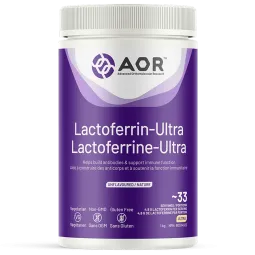
Lactoferrin Ultra, 1 kg
Product Code : AOR04159
Cross-flow microfiltered whey protein isolate and concentrate provide amino acids to help build antibodies Source of essential amino acids/branched chain amino acids Helps build and repair body tissues Builds antibodies
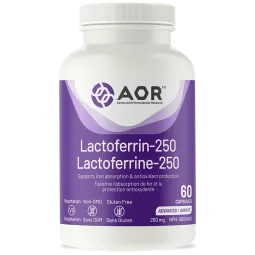
Lactoferrin-250, 60 Capsules
Product Code : AOR04110
An iron binding glycoprotein found in whey fractions An iron-binding glycoprotein found in human and bovine milk A freeze-dried powder produced using advanced ion exchange and membrane filtration Provides antioxidants to maintain good health
Leave a comment