













More Than Just Protein: Essential Nutrients to Prevent Muscle Loss in Old Age
"Even though I make sure to eat meat and walk diligently as I get older, why do my legs keep losing strength and why do I feel so lethargic?" You have likely wondered this at least once. Many people focus solely on protein intake to prevent muscle loss in old age, but unfortunately, protein alone is still lacking. Since digestive and absorption capabilities decline with age, you must ensure you also consume the hidden helper nutrients that assist protein in being properly synthesized into muscle. Today, I will clearly introduce the essential nutrients that will double the effectiveness of protein and fully replenish the muscles in your body, which previously felt like pouring water into a bottomless pit.
Why Is Protein Alone Insufficient? The Real Cause of Muscle Loss in Old Age(Sarcopenia)
The reason muscle loss persists in the elderly, even with a diligent meat diet, is that as we age, our body's nutrient absorption factories do not function as efficiently as they used to. In fact, once people reach their 60s or older, gastric acid secretion and digestive enzymes decrease; consequently, no matter how much protein is consumed, it often fails to reach the muscles and is instead excreted. Furthermore, as inflammation develops easily and cells age, the signaling pathways responsible for muscle synthesis also become sluggish. In other words, muscle loss in old age is not simply due to a lack of protein; the true cause of sarcopenia is a deficiency in the nutrients that act as the connecting links between protein and muscle. To maintain healthy muscles for a long time, it is crucial to combine protein with various nutrients that aid muscle synthesis, along with consistent strength training.
Protein's Perfect Partners: 3 Key Nutrients That Aid Muscle Synthesis
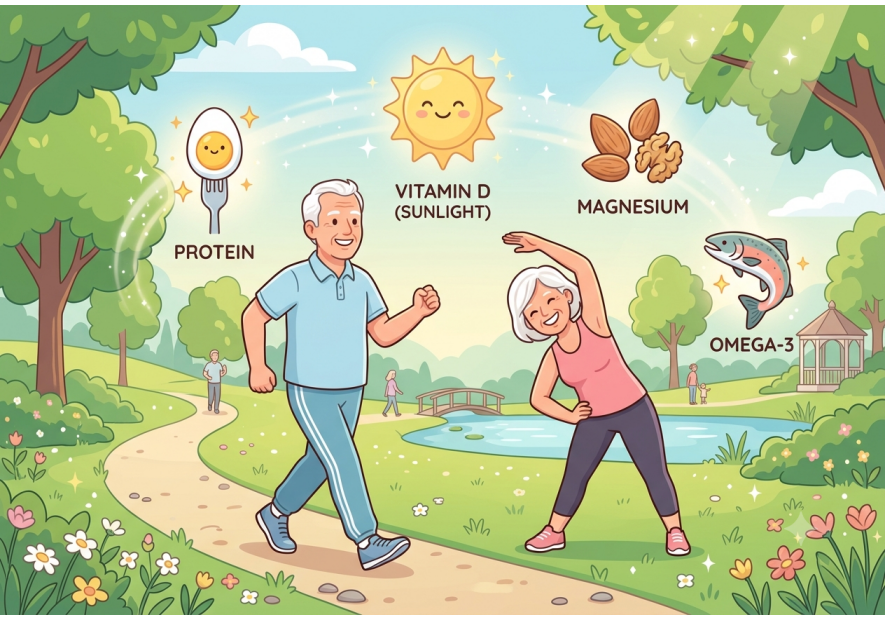
If protein is the building block of muscle, the ultimate trio of muscle-synthesizing nutrients that firmly bind it together are Vitamin D, Magnesium, and Omega-3. First, Vitamin D not only strengthens bones by aiding calcium absorption but also makes muscles firmer by directly regulating the contraction and relaxation of muscle cells. When magnesium is added to this, it assists the protein synthesis process itself—such as the binding of amino acids and ribosomes—and contributes to muscle contraction, relaxation, and recovery.
Omega-3 effectively eliminates chronic inflammation caused by aging, preventing muscles from breaking down prematurely. No matter how good the protein you consume is, without these three helpers, it is likely to be lost rather than fully absorbed into the muscles. Ultimately, in old age, consuming these nutrients in a balanced way alongside protein is the most effective way to slow down muscle loss and prepare for a healthy old age.
The Best Way to Consume Nutrients for Muscle Growth: When and How Should You Eat Them for Effectiveness?
No matter how beneficial foods and nutrients are for preventing sarcopenia, the amount absorbed by the body varies greatly depending on when and how they are consumed. In a senior diet with weakened digestive capabilities, rather than consuming all protein in a single meal, you should distribute 20–30g evenly across breakfast, lunch, and dinner to maximize muscle synthesis efficiency. Additionally, to ensure optimal timing for nutrient intake, fat-soluble Vitamin D and Omega-3s should be taken immediately after or during a meal to ensure thorough absorption without gastrointestinal issues. In particular, to support nighttime when muscle cells actively regenerate, taking magnesium after dinner or before bed can greatly aid in muscle relaxation and promote restful sleep. Regular nutrient intake timing and a balanced diet are crucial for maintaining muscle mass for a long time, even as you age. Small changes in dietary habits can serve as a solid foundation for maintaining activity and a healthy life in old age.
Lifestyle Checklist for Muscle Health in Old Age
Healthy muscles are not built overnight. They can only be maintained for a long time when combined with consistent exercise and a balanced diet. Performing strength training 2 to 3 times a week, along with daily walking or stretching, is highly effective in preventing sarcopenia. It is even more effective if you also ensure sufficient intake of protein, Vitamin D, magnesium, and Omega-3s, as well as adequate sleep. Additionally, regularly checking your weight and muscle strength to monitor your physical condition is an important method for maintaining muscle mass.
Conclusion
While muscle mass naturally decreases with age, this process can be significantly slowed down through proper nutrition and lifestyle habits. Although protein is essential, you can expect even more positive synergy for muscle health when you also ensure you consume nutrients such as Vitamin D, magnesium, and Omega-3s. Adding regular strength training, a balanced diet, and sufficient rest to this will greatly help prevent sarcopenia. Above all, what matters most is not a special secret method, but small habits practiced consistently every day. If you combine a table filled with care and consistent effort, you can beautifully complete a solid and vibrant old age that remains unshaken by the passage of time.
Frequently Asked Questions (FAQ)
Q. How much protein should I consume daily in my senior years?
A. Generally, healthy seniors are recommended to consume about 1.0 to 1.2 grams of protein per kilogram of body weight. If you have sarcopenia or engage in strength training, higher intake may be necessary depending on your individual condition, so it is advisable to consult a professional.
Q. What foods are beneficial for muscle health?
A. It is recommended to consume a balanced diet including high-quality protein foods such as chicken breast, fish, eggs, tofu, legumes, milk, and yogurt, along with oily fish, nuts, and green vegetables.
Q. What is the most effective exercise for preventing sarcopenia?
A. It is recommended to consistently perform strength training exercises, such as squats, standing up from a chair, climbing stairs, and resistance band exercises, 2 to 3 times a week. Including walking and balance exercises in this routine further helps maintain muscle strength and prevent falls.
Source
my.clevelandclinic.org / Sarcopenia (Muscle Loss): Symptoms & Causes
www.mdpi.com / Protein Intake and Sarcopenia in Older Adults
www.preventivemedicinedaily.com / Muscle Mass and Healthy Aging
www.onepeloton.com / 3 Amino Acids for Muscle Growth

Leave a comment