


















The Key to a Blood Sugar Diet, 3 Nutrients That Boost Metabolic Flexibility and Build a Weight-Losing Body
Have you ever felt frustrated because you didn't lose weight despite your efforts? If you tighten your diet and reduce calories every day without seeing results, the real problem might not be your willpower, but your "metabolic flexibility." It means your body has become rigid, unable to burn carbohydrates and fats freely as needed. When metabolic flexibility is low, blood sugar levels fluctuate wildly, and you develop a body type where excess energy is easily converted directly into fat. Instead of dieting by forcing yourself to starve, it is time to turn your body's metabolic switch back on and transform your body into one that loses weight on its own. Today, let's look at three nutrients that stabilize blood sugar and boost metabolic flexibility.
The Reason You Don't Lose Weight Even When Eating Less: The Problem Is Blood Sugar, Not Calories
When dieting, many people believe that simply reducing calories will lead to weight loss. However, even when consuming the same amount of calories, our bodies react significantly depending on how quickly blood sugar levels rise. When blood sugar spikes rapidly, a large amount of insulin is secreted to lower it; insulin is an "obesity hormone" that plays a role in storing excess energy as fat. If these blood sugar spikes occur repeatedly, fat accumulates easily, and the body's ability to use body fat as an energy source may decrease. This is precisely why, if you truly want to lose weight, you must put down your calorie calculator and address these blood sugar spikes first.
The Secret to a Body That Loses Weight Naturally: What Is Metabolic Flexibility?
Metabolic flexibility refers to the body's ability to freely convert and use carbohydrates and fats as energy sources depending on the situation. A characteristic of healthy metabolism is efficiently burning carbohydrates after a meal and stored fat on an empty stomach or during exercise. However, if metabolic flexibility decreases, the body becomes dependent solely on carbohydrates, fails to burn fat effectively, and accumulates body fat easily. Conversely, if metabolic flexibility increases, blood sugar levels stabilize and the time spent using fat as energy increases, which can transform the body into one that is easier to lose weight from. Therefore, the key to recent blood sugar diets is not starving oneself, but restoring metabolic flexibility.
3 Essential Nutrients to Boost Metabolic Flexibility and Control Blood Sugar
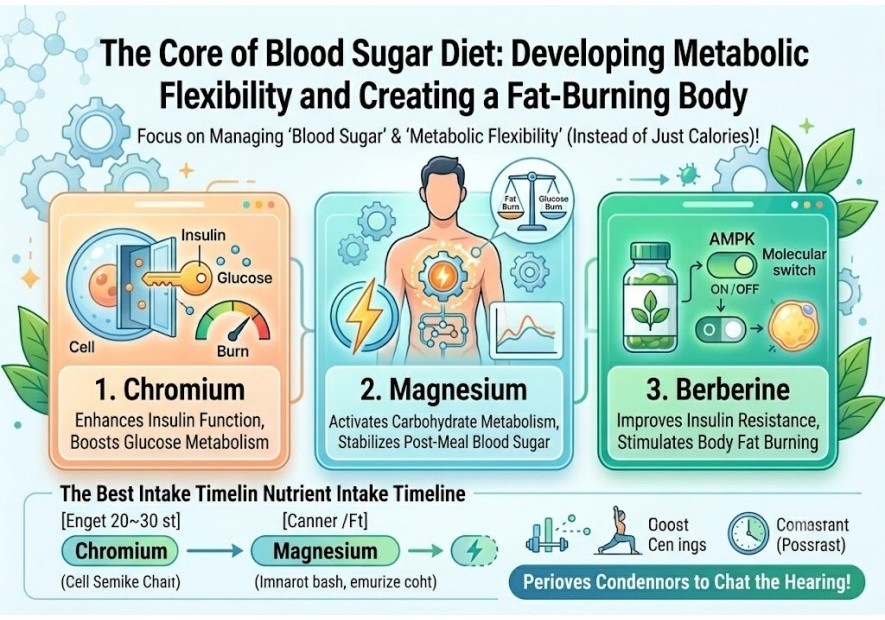
To improve metabolic flexibility, it is crucial to consume sufficient nutrients that aid in energy metabolism and blood sugar control, alongside proper dietary management. The first is 'Chromium,' which supports insulin function so that cells can effectively utilize glucose as fuel. The second is 'Magnesium,' which promotes carbohydrate metabolism and stabilizes post-meal blood sugar. The third is 'Berberine,' which improves insulin resistance and directly stimulates body fat burning. These three nutrients can assist insulin function and help maintain stable blood sugar levels, while also supporting cells in efficiently using glucose. Consequently, they can play a positive role in enhancing metabolic flexibility by reducing blood sugar spikes and increasing the ability to utilize fat as an energy source.
Supplements Alone Are Not Enough!
No matter how good your supplements are, if your daily lifestyle habits are compromised, it is like pouring water into a leaky bucket. The most important factor is a diet that does not cause a rapid rise in blood sugar; this involves reducing simple carbohydrates and consuming sufficient protein and dietary fiber. Adding just a light walk after meals to this significantly helps reduce blood sugar spikes. Furthermore, regular strength training increases the muscles' ability to utilize glucose, thereby improving both basal metabolism and fat-burning capacity. Ultimately, when the fuel of intermittent fasting and consistent exercise is added to the powerful booster of nutritional supplements, a perfect metabolic constitution that does not gain weight is finally achieved.
Frequently Asked Questions (FAQ)
Q: Can changing the order of meals lower blood sugar?
A: Yes, simply changing the order of your meals can help moderate blood sugar spikes to some extent. In particular, eating in the order of vegetables → protein → carbohydrates is beneficial for reducing blood sugar spikes.
Q: What are the 10 foods that help reduce blood sugar spikes?
A: Representative foods that help reduce blood sugar spikes include oats, legumes, vegetables, nuts, berries, sweet potatoes, brown rice, Greek yogurt, avocados, and fish.
Q: Do I need to eat all three essential nutrients that increase metabolic flexibility and control blood sugar?
A: You do not necessarily have to eat all three. Rather, it is more important to choose based on your health condition and dietary habits. The nutrient to consider first is magnesium.
Conclusion
The success of a diet lies not in the pain of starving yourself to reduce calories, but in restoring your body's metabolic system to normal. The three nutrients introduced today—chromium, magnesium, and berberine—combined with intermittent fasting and consistent exercise, are the best keys to vigorously restart your clogged metabolic engine. Once you stabilize your blood sugar and regain metabolic flexibility, your body will transform into a smart constitution that burns fuel on its own instead of accumulating fat. Stop stressing over the numbers on the scale and start making healthy changes right now to turn on the metabolic switch within your cells!
References
14 Common Reasons You’re Not Losing as Much Weight as You Expected: www.healthline.com/nutrition
Reasons You’re Not Losing Weight: www.webmd.com/diet
Why You’re Struggling to Burn Fat: www.wholehealthrd.com
5 Best Blood Sugar Supplements: www.wiserlifestyles.com/
A Dietitian Shares 10 Simple Habits: www.verywellhealth.com/

Leave a comment