










Why You Can Not Rely Solely on Sunlight for Vitamin D and the Right Way to Supplement
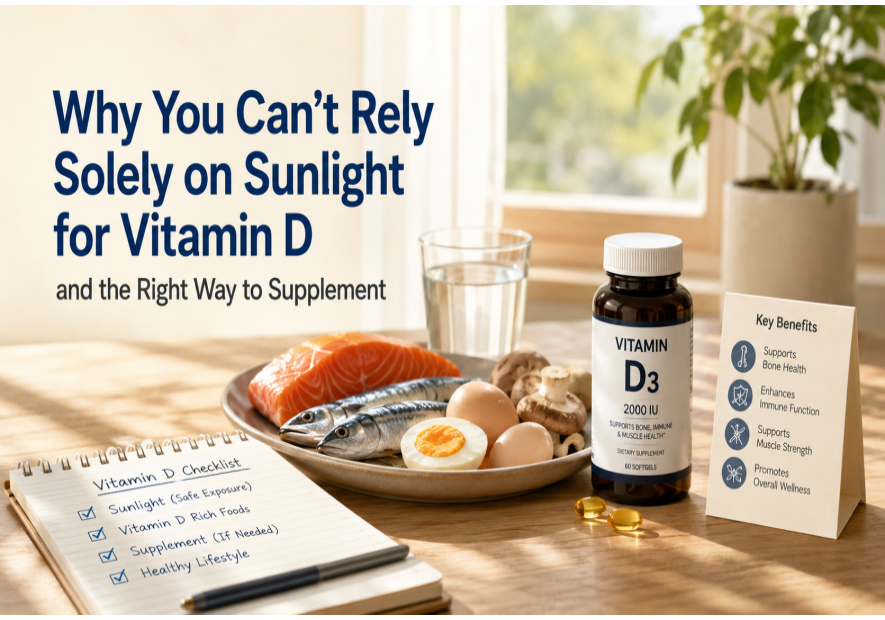
Many people believe that getting plenty of sunlight will naturally ensure they have enough vitamin D. However, the number of people diagnosed with vitamin D deficiency during health screenings is increasing every year, and it is considered a common problem, especially among modern people who spend a lot of time indoors. Due to various factors such as the season, sunscreen use, age, and lifestyle habits, it is not easy to synthesize all the necessary vitamin D through sunlight alone.
So, how much sunlight do you need to get to produce adequate levels of vitamin D? Also, when and how should you use food and supplements? In this article, we will take a detailed look at why relying solely on sunlight can lead to vitamin D deficiency and how to supplement it in a healthy way.
Why You Might Be Vitamin D Deficient Even Though You Get Plenty of Sunlight
Why might you be diagnosed with a vitamin D deficiency even though you spend time outdoors every day and get plenty of sunlight? We often wear sunscreen or long sleeves when we go out, which can reduce vitamin D synthesis. Additionally, the intensity of UV rays weakens in winter, and fine dust or cloudy weather also affect the amount of UV rays that reach the ground. The sunlight we encounter indoors is blocked by glass windows, preventing UVB rays—which are essential for vitamin D synthesis—from entering at all. Another key factor is that the skin’s ability to synthesize vitamin D decreases with age. Because of this combination of factors—such as season, lifestyle, and age—it becomes difficult to obtain sufficient vitamin D solely from sunlight.
Signs Your Body Is Sending That You’re Vitamin D Deficient
While people often associate vitamin D solely with bone health, this nutrient actually plays a key role in regulating the body’s overall immune and hormonal systems. If you’ve been feeling unrested even after a good night’s sleep, or if you’re experiencing persistent, unexplained chronic fatigue or lethargy, this could be a strong warning sign that your body’s vitamin D stores are depleted. Additionally, a decline in immune cell activity can lead to frequent colds and other seasonal illnesses, while slow wound healing and frequent muscle aches are also common symptoms of deficiency.
In particular, since vitamin D plays a crucial role in aiding calcium absorption, a deficiency inevitably exposes you to the risk of weakened bones and increased susceptibility to fractures. Furthermore, since it also affects serotonin secretion, it can trigger seasonal depression or mood swings, so you should never dismiss the small changes your body is signaling. If you experience prolonged fatigue, muscle weakness, or frequent infections, it may be helpful to check your vitamin D levels.
Why You Need to Supplement with Vitamin D
Although vitamin D is found in fatty fish such as salmon, mackerel, and tuna, as well as in egg yolks and mushrooms, it is nearly impossible to meet your daily requirement through diet alone. For people over 50, those who work indoors, office workers who frequently work late shifts, and pregnant women, the skin’s ability to synthesize vitamin D naturally decreases. Therefore, taking a high-quality vitamin D supplement is the wisest choice to maintain safe and adequate levels.
In particular, since vitamin D is a fat-soluble nutrient that accumulates in the body, supplementing with a consistent daily dose is the fastest way to overcome a deficiency, rather than relying solely on sunlight. Therefore, building a foundation through diet and consistently taking a supplement with the right dosage for you is the surest shortcut to maintaining healthy vitamin D levels in your daily life.
The Most Effective Way to Supplement Vitamin D
The key to absorbing vitamin D most effectively is to take the supplement immediately after a meal. Since vitamin D is a fat-soluble nutrient, taking it during a meal that contains an appropriate amount of fat or within 30 minutes after eating—rather than on an empty stomach—can increase absorption rates by up to 50%. For general health maintenance, a daily intake of 1,000 to 2,000 IU is appropriate. However, if you spend most of your time indoors and have a severe deficiency, it is advisable to consult a specialist and first raise your vitamin D levels using a high-dose product containing 4,000 to 5,000 IU. Additionally, when selecting a vitamin D supplement, be sure to check that it is in the form of vitamin D3, which is highly bioavailable, and choose a product that is formulated with vitamin K2 to aid in the proper transport of calcium, as this will provide a synergistic effect.
Frequently Asked Questions (FAQ)
Does applying sunscreen prevent the body from producing vitamin D?
Applying sunscreen reduces UVB exposure, which can decrease vitamin D production. However, in real life, it’s rare to apply sunscreen perfectly, so the body still produces some vitamin D.
Should I take vitamin D and K2 together?
Vitamin D increases calcium absorption, while K2 helps ensure that calcium is utilized by the bones rather than accumulating in the blood vessels. Taking vitamin D alone can lead to calcium buildup in blood vessels or soft tissues (the calcium paradox), which K2 helps prevent. However, not everyone needs to take them together, and this may vary depending on individual circumstances.
Risks of Vitamin D Overdose
While consuming appropriate amounts in the short term is safe, long-term high-dose intake (especially 5,000 IU or more per day for several months) can lead to hypercalcemia and result in kidney damage, vascular calcification, and cardiac arrhythmias.
Conclusion: Vitamin D is an essential nutrient
Ultimately, within the modern lifestyle, Vitamin D is an essential nutrient that we can no longer rely solely on sunlight for; it is a nutrient we must diligently supplement on our own. As we have seen, daily indoor living and the habit of using sunscreen block sunlight synthesis, but a simple habit of taking a supplement immediately after a meal can easily overcome this massive barrier of deficiency. To maintain bone health, revitalize a lethargic daily routine, and protect your immunity, now is the time to actively start supplementing with Vitamin D for your body. I encourage you to consistently take Vitamin D3 with the correct dosage suited to you, building a solid foundation for your health from the unseen. Why not prepare for a vibrant tomorrow with a Vitamin D tablet for yourself after lunch today?
Source:
Is Sunlight Enough for Vitamin D?/https://www.jamiesonvitamins.com/blogs
Is Sunlight Really Enough To Meet Your Vitamin D Needs?/https://www.healthandme.com/nutrition
9 Signs Your Body Is Low on Vitamin D/https://www.verywellhealth.com/
What Does Vitamin D Do?/https://health.clevelandclinic.org/vitamin-d
Discover the Most Effective Methods for Getting Vitamin D/https://patientscanada.ca/articles/vitamin

Leave a comment