










If You Have These Symptoms, You Might Need to Suspect Monkeypox?
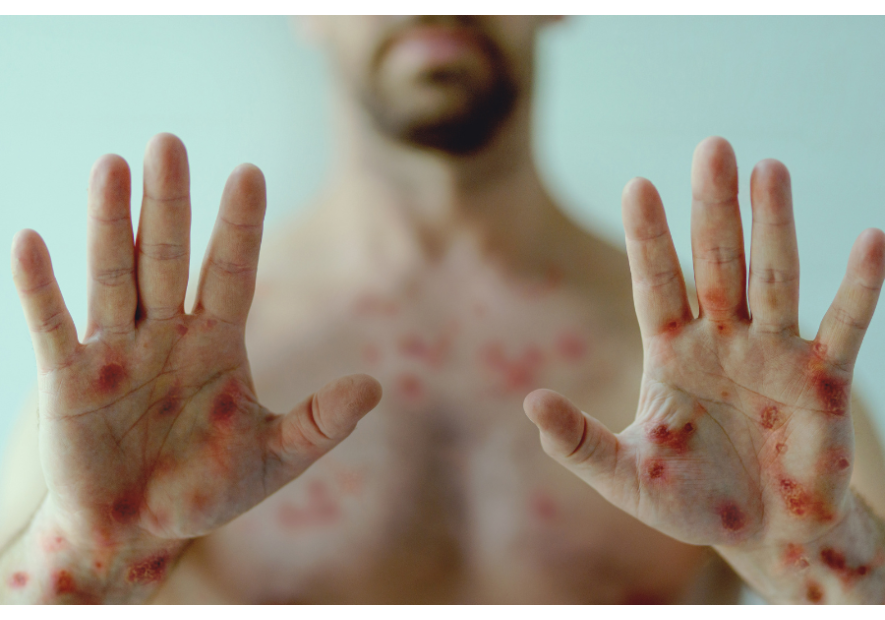
Monkeypox (MPOX; M-pox) spread worldwide in 2022, causing serious impacts in the United States and Europe. At that time, the World Health Organization (WHO) declared a 'Public Health Emergency of International Concern (PHEIC)', the highest level of health alert, but lifted the emergency the following year when the spread slowed. However, this year, monkeypox has spread again in Africa and the mutant 'Clade 1b' has emerged, so the WHO has declared a PHEIC again (August 14, 2024). From 2022 to June 2024, 99,176 confirmed cases have occurred, resulting in 208 deaths. Let's find out what monkeypox is that has the world on edge, what are the symptoms if infected, and what are the prevention and treatment methods.
What Is Monkeypox?
Monkeypox vs. Other Viruses: What Makes It Different?
Skin Rashes: The Key Symptom of Monkeypox
Immediate Actions If You Suspect Monkeypox
Vaccines and Treatment Options
What Is Monkeypox?
Monkeypox was first discovered in 1958 when a chickenpox-like disease occurred in monkeys bred for research, hence the name "monkeypox." Cases of monkeypox infection were first reported in the Democratic Republic of the Congo in 1970, and have since been reported in Central and West African countries such as Gabon, Nigeria, the Central African Republic, Côte d'Ivoire, Congo, and Cameroon, becoming endemic. However, since May 2022, it has been spreading worldwide, starting with outbreaks in Europe, including Spain, the United Kingdom, and Italy.
Monkeypox is a zoonotic disease that can be transmitted primarily from animals to humans. It is often transmitted through direct contact with the blood, body fluids, or skin lesions of infected animals. Transmission between humans can occur through respiratory droplets, direct contact with body fluids or skin lesions, or contaminated objects such as bedding or clothing. Monkeypox is less contagious than smallpox. After an incubation period of 5 to 21 days, infection begins with acute fever of 38℃ or higher, headache, lymphadenopathy, back pain, muscle pain, and muscular weakness. After 1 to 3 days, a rash appears centered on the face and spreads centrifugally to other parts of the body (especially the limbs). Lymph node edema is the main symptom, and symptoms usually last for 2 to 4 weeks.
Monkeypox vs. Other Viruses: What Makes It Different?
Monkeypox differs from other viruses in several key ways, including how it spreads, how it causes symptoms, how severe it is, and how quickly it mutates. Here’s how it compares to the well-known COVID-19 virus:
Transmission:
Monkeypox usually occurs when you are in close contact with an infected person, such as through skin-to-skin contact, such as sexual intercourse, direct contact with contaminated bedding or clothing, or prolonged face-to-face contact. Both monkeypox and COVID-19 can be spread through close contact, but COVID-19 is more easily transmitted because it spreads primarily through respiratory droplets and aerosols.
Symptoms:
Symptoms of monkeypox include fever, headache, muscle pain, swollen lymph nodes, and a characteristic rash that progresses in several stages. The rash often starts on the face and spreads to other parts of the body. COVID-19 symptoms range from mild to severe and include fever, cough, shortness of breath, fatigue, and loss of taste or smell. In severe cases, it can lead to pneumonia and respiratory failure.
Mutation Rate:
Monkeypox is caused by a DNA virus, which has a more stable genetic structure and mutates less frequently than RNA viruses. The COVID-19 virus is caused by an RNA virus (SARS-CoV-2) and mutates more rapidly, resulting in a variety of variants.
Severity:
Monkeypox is generally not severe and has a low mortality rate. Most people recover within 2 to 4 weeks. The severity of symptoms caused by the COVID-19 virus varies widely. Some individuals experience mild symptoms or are asymptomatic, while others, especially the elderly and those with underlying medical conditions, can be severe and have a higher mortality rate.
Prevention and Treatment:
Prevention measures for monkeypox include avoiding contact with infected individuals or animals and practicing good hygiene. There is a vaccine approved by the US FDA to prevent monkeypox. There is no specific treatment, but symptoms usually resolve on their own within 2 to 4 weeks. A vaccine for the COVID-19 virus is available and is effective in preventing severe disease. Treatment includes antiviral medications such as paxrobinide and lagevrio.
Skin Rashes: The Key Symptom of Monkeypox
A skin rash is a characteristic symptom of monkeypox and plays an important role in diagnosing the disease. Understanding the characteristics and progression of a monkeypox rash is important in differentiating it from rashes caused by other diseases.
Stages of skin rash development:
1. Macular: The rash begins as flat, discolored spots on the skin, called macules. These often appear first on the face and then spread to other parts of the body, including the palms and soles. Unlike other viral rashes, monkeypox rashes can affect the palms and soles, which is a key distinguishing feature.
2. Papules: The spots then develop into papules, which are slightly raised, firm lesions.
3. Vesicles: After the papule stage, the lesions become vesicles, which are small, fluid-filled blisters.
4. Pustules: The vesicles transform into pustules, which are larger, pus-filled lesions. These pustules are usually round, firm, and deeply located, often with a characteristic central depression (the umbilicus). 5. Crust: Finally, the blister dries to form a crust, which eventually falls off. The entire rash cycle from spot to crust usually takes about 2 to 4 weeks.
Skin Rash Severity:
The rash can be painful, especially during the blister stage, and the lesions can fill with pus and be tender to the touch. The severity of the rash can vary. Some individuals experience a mild rash with few lesions, while others may have numerous lesions and extensive involvement.
Immediate Actions If You Suspect Monkeypox
If you suspect you have monkeypox, it is important to take immediate action to protect yourself and others. Here’s what to do:
Isolate yourself:
Stay away from others as much as possible to prevent the spread of the virus. This includes avoiding physical contact, sharing personal items, and being in close proximity to others. Stay in a separate room with a bathroom, if possible. Avoid sharing spaces, such as the kitchen or living room, with other people in your home.
Contact your healthcare provider:
Before going to a hospital or clinic, contact your healthcare provider or local public health department and tell them about your symptoms and potential exposure (such as recent travel to an area with monkeypox cases or close contact with someone diagnosed with monkeypox). Your healthcare provider may advise you to get tested for monkeypox or take other steps. Follow their instructions carefully, including recommendations for treatment or home care.
Notify your close contacts:
Tell your close contacts about your symptoms. This is important so they can monitor their health and take preventive measures. If recommended by your healthcare provider or public health authority, provide information about your close contacts so they can be notified and advised on how to proceed.
Practice good hygiene:
Use soap and water or an alcohol-based hand sanitizer, especially after touching your face or handling potentially contaminated items. Avoid touching your eyes, nose, or mouth, as the virus can enter your body through mucous membranes. Clean and disinfect surfaces in your living space regularly, especially frequently touched areas such as doorknobs, light switches, and bathroom fixtures.
Vaccines and Treatment Options
Treatment for monkeypox is generally symptomatic, and severe infections are treated with antiviral drugs or immunoglobulins used for smallpox treatment. The most commonly used antiviral drug is Tecovirimat (TPOXX). The risk of severe infection is particularly high in children and immunocompromised individuals, and pneumonia and sepsis may occur, so caution is essential.
The European Medicines Agency, the European Medicines Agency, recommends using treatments for diseases caused by viruses in the same family as monkeypox, cowpox, and smallpox, namely, varicella-zoster virus. The smallpox vaccine is up to 80% effective against monkeypox. Scientists have already developed three vaccines for monkeypox through research. However, the WHO currently does not recommend mass vaccination against monkeypox, and states that vaccination should only be considered for people at risk, such as partners in close contact with an infected person or healthcare workers.
Source:
1. What Is Monkeypox: Symptoms, Pictures, and Treatment - Healthline. https://www.healthline.com/health/monkeypox.
2. Monkeypox and COVID-19: Here Are Key Differences. https://www.uhhospitals.org/blog/articles/2022/05/monkeypox-and-covid-19-here-are-key-differences/.
3. Monkeypox: What is it and how can it be prevented? - Mayo Clinic. https://www.mayoclinic.org/diseases-conditions/infectious-diseases/expert-answers/monkeypox-faq/faq-20533608.
4. Treatment and prevention of mpox (monkeypox) - UpToDate. https://www.uptodate.com/contents/treatment-and-prevention-of-mpox-monkeypox.
5. Mpox Treatment Information for Healthcare Professionals. https://www.cdc.gov/poxvirus/mpox/clinicians/treatment.html.

Leave a comment